
Catherine Joy White, writer, actor and filmmaker, joins us to speak on her newest short film Swim Sistas. Swim Sistas is an ode to water and the joy found when generations of Black British women come together. The film brings together poetry, storytelling and visual languages and ‘reimagines the documentary form as a cinematic love letter to water’. Exploring themes of healing and transformation, joy and reclamation, Swim Sistas features four women spanning various experiences with swimming, age and identity yet a shared pull towards swimming. Narrated by Naomie Harris as the voice of ‘Mami Wata’, the short film brings questions about what freedom, community and togetherness looks like, with a renewed love of water at the centre.
Catherine joins us to share her story of creating Swim Sistas and the journey it has taken on since then.
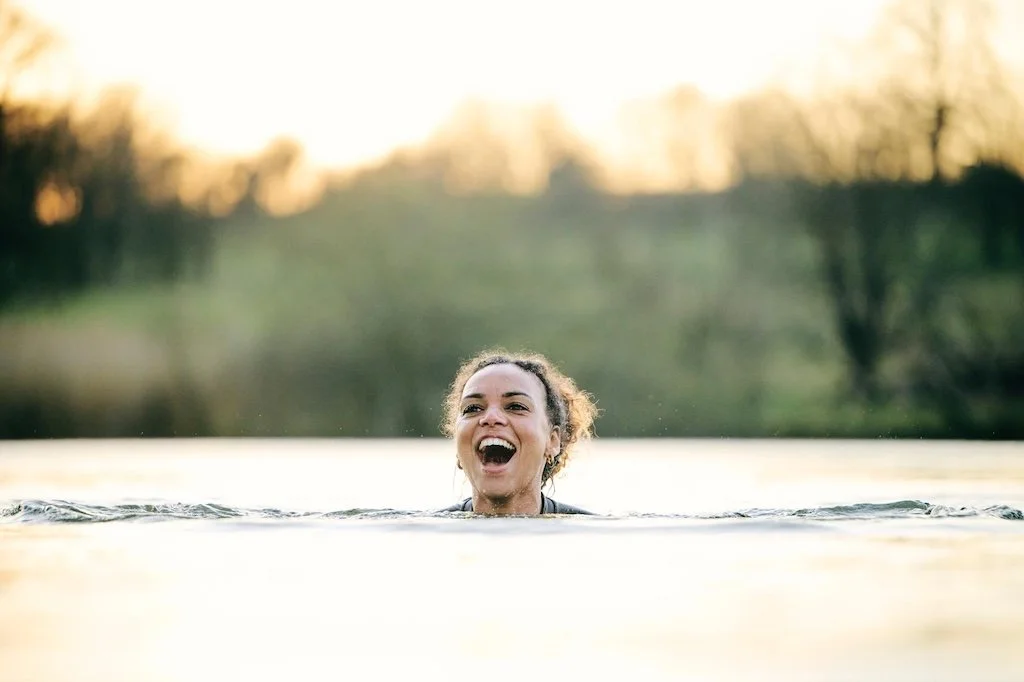
Catherine Joy White
The inspiration for Swim Sistas seemed to come from a place of grief and loss, yet finding joy in the midst of that. What brought you back to swimming?
For a world that's now filled with such joy, it really did start from this place of complete grief. This was 2021, second lockdown and the start of January, February. I lost a really close friend to suicide. It was at that time when we were allowed out for an hour a day for daily exercise. I couldn't go to the funeral - I went to his funeral on Zoom. Catherine takes a second to pause and shares: It's still such a visceral feeling. I mean, grief is always horrific, but grief by suicide is a particular grief because it's got that sense of no closure, you're grasping for answers -it was impossible to get them. So, it's just a different kind of grief. Anyway, I was on one of those daily walks, and walked right past
this lake, and there was just the feeling to get in- something pulling
me, calling me. I don't know what it was it was early Feb and it was freezing! And I wasn't planning to go for a swim but I just stripped down to my tee and pants and got in for a few seconds and came out.
There was a feeling there of release. I felt something again, being really numb for however long since then. And so from being in that dark place
and in that numb place, it just unlocked something, and I found myself going back to that lake again and again.
And there's research into what that feeling is: It's endorphins, and there's all sorts of things that are going on, and the cold-water shock, all of that. But for me, none of that was going through my head at the time. I didn't know what else to do. I just knew that I needed to feel something, and I started to find myself present again. And that became a pattern, a routine, and that was beautiful. But over the course of that, it also became quite apparent that that wasn't something that was necessarily accessible to a lot of people. I was in Oxford at the time, so I lived near a lake, access to a green space, all of that, but I knew that that wasn't the case for everyone.
She began to realise how few people had access to this experience that she was having and thriving in.
I had family in other places in the UK, and nobody had that [access]. And also, then you start to look at it more and more, and it's kind of like, okay, there's a problem here in terms of who we see. I was really welcomed to this community of swimmers, but they were mostly 50 plus. It was beautiful, but it also was different being the youngest by some decades, and the only person that wasn't white. So that was a disjointed thing because I was going through this space of healing and safety and being held, but I was also thinking so much about the fact that this wasn't a space that was accessible to a lot of people.
I started to do research and look out for other swimmers, and along the course of that journey, I started to meet other swimmers, especially Black women, and there was this sense of all of us having our own journeys, and it is-it's a journey. If you're a Black woman and you're open water swimming, something has brought you to that space. And then you know, as that went on, I thought, "Oh no, we're here. We are here, but we're still being written out of this space”. So, my perspective changed.
What made you reach out for that community of other swimmers once this was something you felt comfortable carrying on doing in this lake?
I think it's because I so innately as a person, count my blessings. I have never suffered from mental health crises, but when my friend died, I found myself the lowest I'd ever been, and I didn't really know where to put that. The statistics for those who will go on to die by suicide are the highest for those who've also lost someone by suicide [that is to say, those who have lost someone by suicide are at increased risk of also dying by suicide compared to others who have not lost someone by suicide]. It doesn't make sense because you know what it does and how it can really devastate a community, but it happens. So for me, it was kind of the discovery that this space helped me heal from that. But then it became something bigger. It was also something about the freedom of that. It became really representative of womanhood and of how I feel about myself as a person, how I feel about how I can fit in this world. And when you realise that you're having that, and it isn't necessarily something that everyone else has, what's the point of existing in a silo with what feels like a discovery? You don't want to be alone in that!
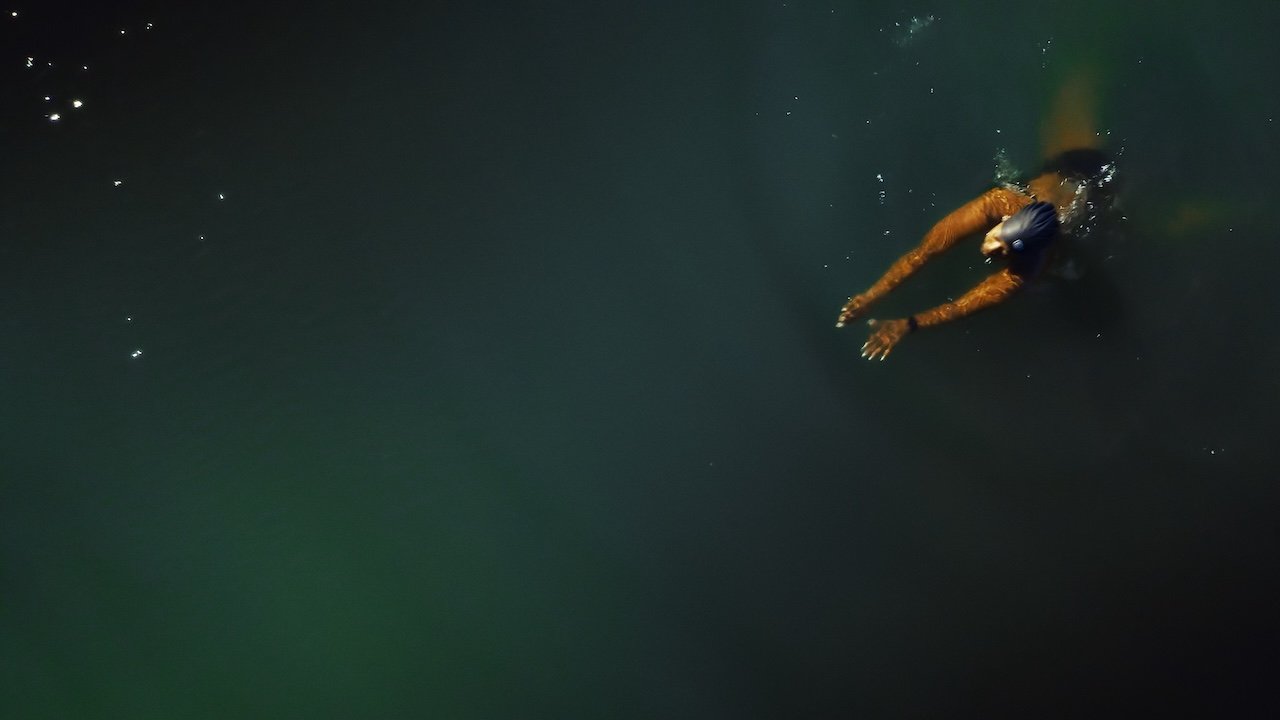
And from there Swim Sistas comes to life. Swim Sistas is a story of connection: to each other, womanhood, open water and this sense of freedom. The film explores the experiences of four Black women as they build a relationship with water. It spans the experiences of newer swimmers like 56-year-old Roni to Olympian Alice Dearing, Team GB’s first Black female swimmer.
There is also a strong element of acknowledging the long-standing difficult relationship between many Black people and swimming.
80% of Black children don't swim, 97% of Black adults don't swim. We don't know if it's can't, but don't. It's the statistics that's from Swim England. The University of Plymouth and the Royal Life Saving Society debunkingthe myth that Black people can't float. They they've done some research into how it's actually to do with different ways of floating and much more – there are actually other ways of floating that might be more to your body. I thought, okay, the statistics are there, they exist, valid, and we need to talkabout them all but I'm also always looking for narratives of hope and joy.
Cat notes it's a life-saving skill - one that is becoming increasingly important with the rise of heatwaves and more people wanting to take part in open water swimming to cool down. Yet, the beauty of water and the community she has found is what also brings her to create this film.
There's something just so innately beautiful about water, and there's something so innately beautiful about black women and womanhood and sisterhood and what happens when we come together. And that for me is the space that I want this film to exist in. We don't need to talk only about what it is that is keeping us out of here, let's show these four women across generations, across all walks of life, who exist in this space as an inspiration for all sorts of things. It's actually bigger than just swimming now. For me, it's about being brave enough to step into a space. You look out and you breathe deeply for the first time. You feel the wind. You hearthe birdsong. You see and feel and exist.
Cat shares some more about the community we meet in Swim Sistas.
Jasmine is a childhood friend -she's a rugby player, so she's always existed in these male and white-dominated spaces. She had a whole experience of going on Traitors and swimming became a really sacred space for her, so that was a really beautiful point of connection. Alice, I met because when I started going through my swimming journey, I discovered SoulCap, which is the swim cap brand for Afro hair. Alice was preparing to go to the Olympics. She was going to be the first Black woman to represent Great Britain inswimming at the Olympic Games in Tokyo. And they banned her swimming cap! Alice became the face of this entire movement and she decided to run with that. She decided to go with that, and to speak out, and realise that she was going to be then the potential kind of turning point for all of the generations that come up with her. They lifted the ban, and she was allowed to wear the swim cap when she competed, which is just so inspiring for many reasons. And Roni, who calls herself a work in progress, she's still learning to swim. So when we filmed Swim Sistas, that was actually her first ever swim in a lake. That's how amazing she is, and she was 54 then and she had been told as a child ‘you'll never swim. Your bones are too heavy.’ She tried to learn how to swim in her 30s and was told the same thing and got put off. When she was 54, she won a prize at the work, which she could use for some sort of educational vocational training. She decided to use it for swimming lessons. That was the point where she was actually able to begin to turn that around. She’s just swam her first500 meters. She's a proper force of nature! And Lexie, who represents the next generation, she is a young athlete in training. She was 14 when I met her and it's really good to see the different generations.
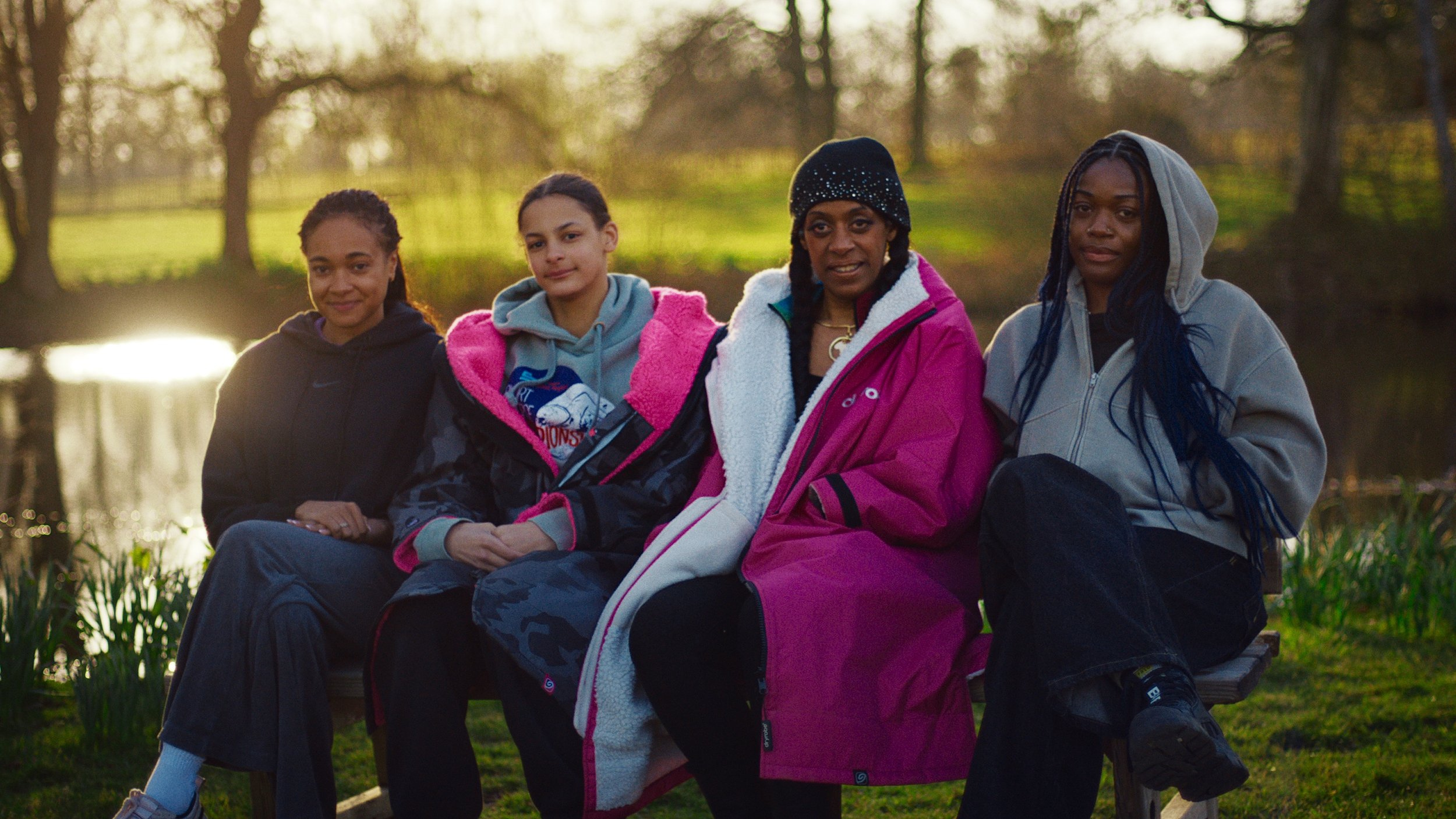
Alice Dearing, Lexie Sandiford, Roni Bruno and Jasmine Boatswain
And the reception to the film?
Well, it's been amazing! We've shown it in some schools and have children who are now inspired to learn to swim. Families who are feeling seen and seeing how it's speaking to different people in different ways, and notjust Black people, and not just Black women, but something about Black women in particular. Just recognising the nuances of the story, like what it is to speak about hair, what it is to speak about that feeling of needing to be ‘on’ and working harder. It was what I wanted when I made the film, but you don't know if something will resonate in that way! On the community level, there’s a French school wanting to get it on their curriculum because they have majority West African students.
Swim Sistas has also been screened at various events, with great response such as at Canary Wharf Summer Screens, Sistaland, Kendal Mountain Festival. It has also been selected for the AcademyAward-qualifying festival, HollyShorts Film Festival.
It’s great and this feels like it's getting people to get closer and feeling seen and to love themselves. We've just been in DC at the National Gallery of Art, so it's going into these community but really influential spaces, as well as grassroots level, which is amazing! And then on the film level, it's doing this amazing festival run. I'm going to LA next week, so it's having its Hollywood premier at a film festival called HollyShorts, which is amajor kind of festival in the Oscar race.
Most importantly, Cat shares that sense of community and togetherness swimming and Swim Sistas has brought to her is one of her biggest takeaways.
I think it has just deepened my understanding of community. I got back into the water in 2021 because I was looking for something. It was something that I was looking for in myself - something that was really insular, I suppose. But in finding that, I was able to look outwards and find an entire community of people who not only are searching for their own sense of hope or whatever it is, but they're also searching for their own sense of who do we hold on to around us when all of the things that we know are stripped away?
It's about being present, yes, but it's also about grounding ourselves in where we are with our contemporaries and with the life and world that we are living right now, because that does speak to representation. Actually, nothing changes without people being able to see the existence of who is in that space, and that can't be just one person hoping to pull everything up with them as they go. If I can hold out my hand to Roni and she's 54 years of age, speaking to people that I will never be able to connect with that way because they'll look at me and say, "You don't understand how hard it was for us.” And Roni can connect with Lexie, who will speak to this next generation of people who are doing it for themselves. But we have to be connected to those around us. There's a strength in that togetherness.