
Beats Without Borders: Rymez’s Journey from Zimbabwe to the World
After high-profile collaborations that gripped the world, Rymez, returns with a clearer vision of the future for talent and understanding creative freedom. A Zimbabwean producer, his name carries more weight now, as respected shaped by faith and possibilities for generations to come.
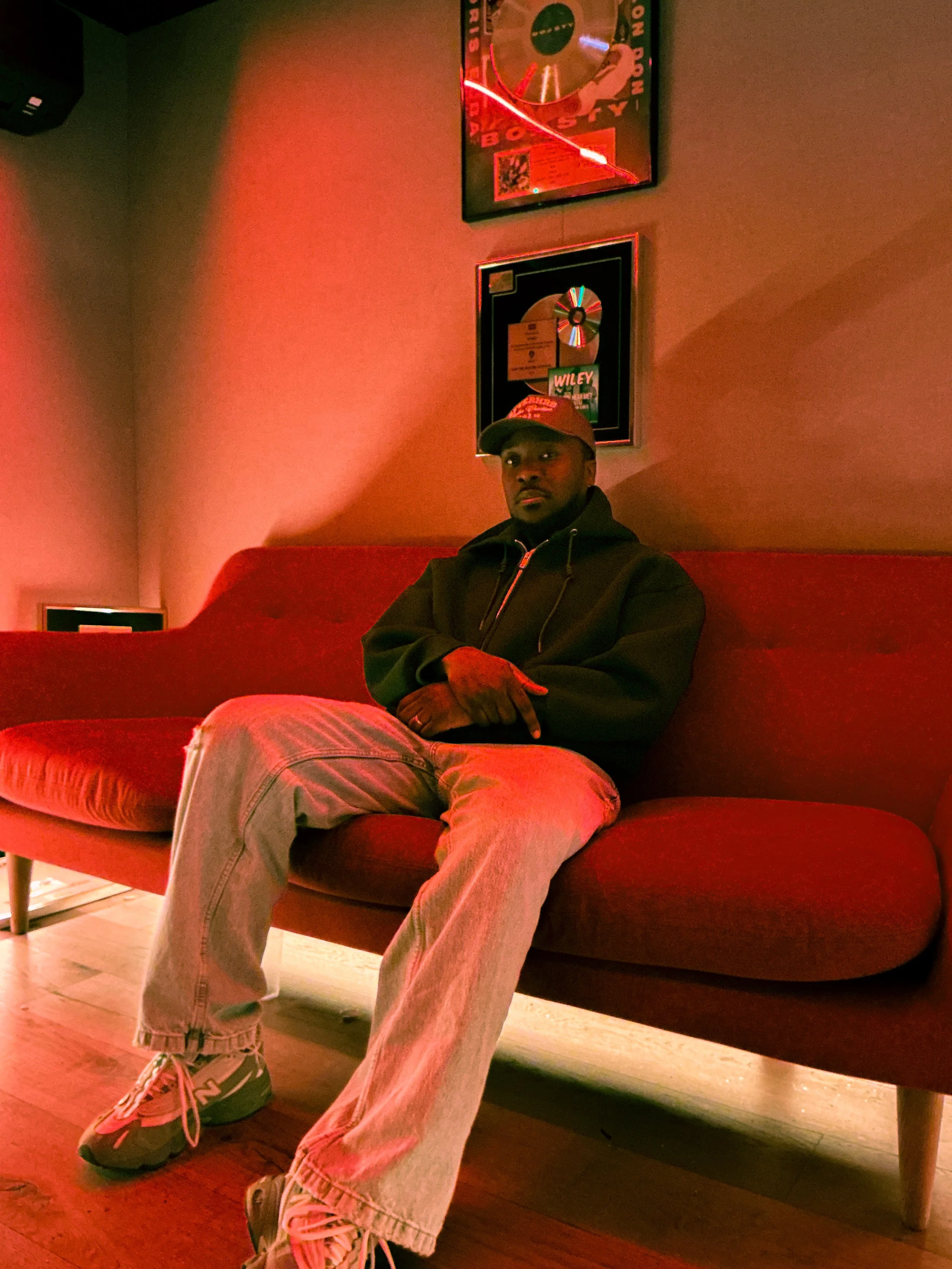
Photo Credits: Jodi Clarke
Zimbabwe. Formally reported dilapidation of the “breadbasket of Africa” still holds the beauty of sub-Saharan Africa. Musically, the charm runs through the people, “I was listening to a lot of, like, old school Zimbabwe music legends.” Rymez is more than comfortable reminiscing about his journey with music to then transition into Britain, it can only make one wonder how he blossomed into a versatile hitmaker.
On a grey, damp Friday in January, inside a discreet building on the edge of Essex, hid a modern, tight-nit studio resided Rymez and his gallery of awards. Through every door, a long hallway positioned ahead with spotlight running above, I was more intrigued to see his space that has opened possibilities for music artists alike.
The fact that Rymez has brought popular culture into the urban landscape in the UK, shifting Versus over to America, voices of Tory Lanez, Sean Paul, Jeremih, speaks to a producer who understands how to move fluidly between scenes without losing authenticity. His sound does not just travel- it translates, blending UK-rooted grit with transatlantic polish, and creating records that feel at home on both sides of the ocean. In doing so, Rymez positions himself not just as a hitmaker, but as a cultural bridge, expanding the reach of UK urban music while reshaping its global conversation. Every element of his productions has translated to many across the globe. Despite lifting talents and creating flows for the UK’s most controversial heads in music, the beats has bounced through the mainstream.
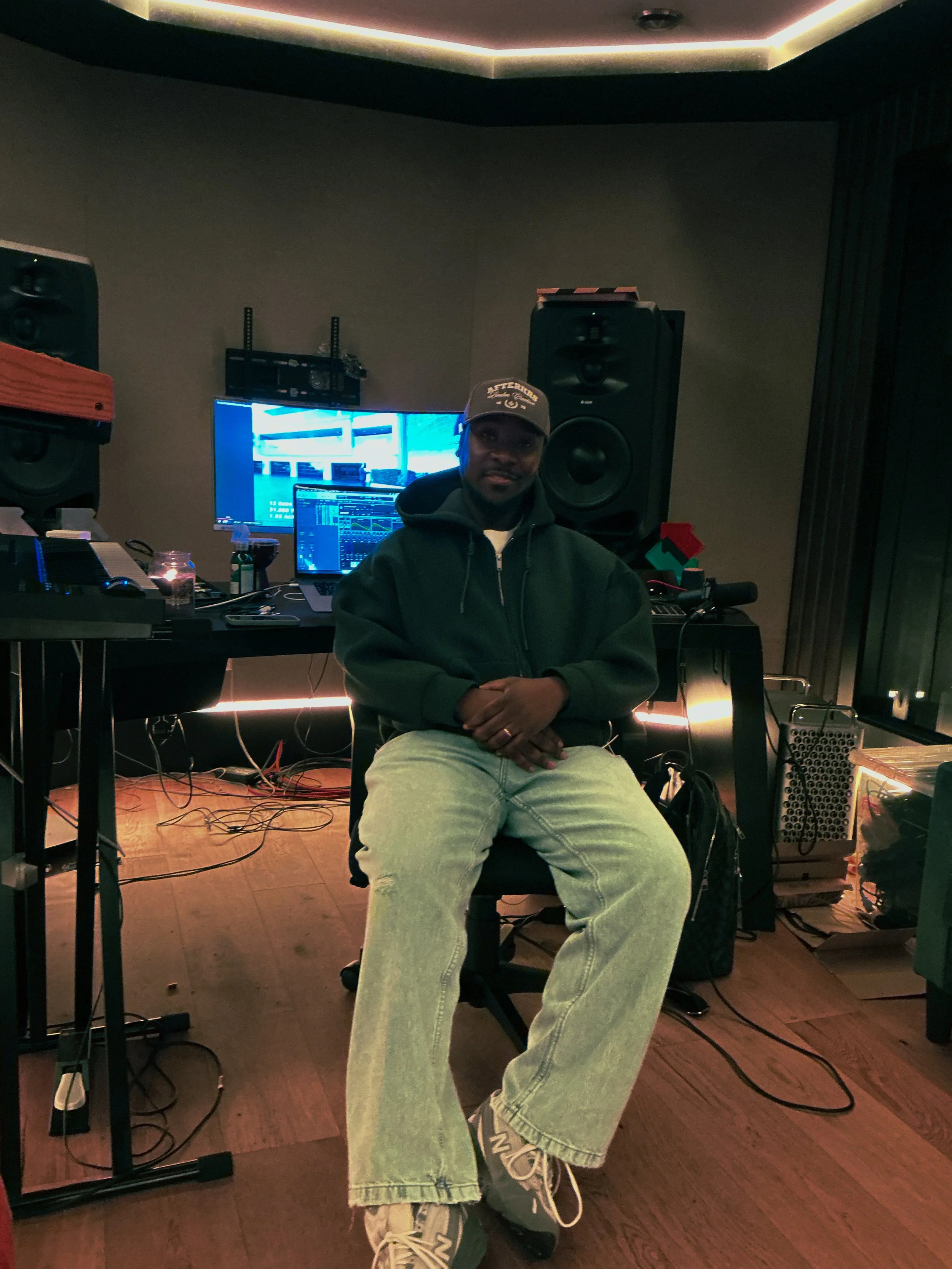
“I am a failed rapper. I just did not like the way I sounded. And no one wanted to make beats with me, so that is how I started producing music,” the beginning is a testament to a musical independence that has been rediscovered and that has built into a new path. “My mum and my brother are my biggest supporters, to be honest with you, since I started rapping.”
Despite this being a firm British success story, however, his self belief released determination in crossing over to a different direction in his education. “I lied to my Mum, I said I took a business class, but I took a music class. So, I went into a music school, and she did not know for an entire year,” he explains. For a while, music was a place of refuge for Rymez until the decision made to use early 2000s social media, “It was during MySpace days, one of my friends suggested I should send my beats to Tinie Tempah, I just shot my shot, sent something to his DM.”
“Tempah and I had a session,” he says, casually, with a humbling smile on his face. “He asked me to come down to London. It was around 2009.” The invitation that changed everything.
London, at that time, was not the glossy, hyper-connected music city it has often painted as now. Guarded. Territorial. Built on handshakes and who-knows-who. Rymez did not arrive with credentials or connections, just belief, hunger, and the quiet confidence of someone who knew they belonged in the room, even if no one else did yet. He found himself working out of a studio in Hounslow with Tinie, learning the rhythms of professional sessions, absorbing the unspoken rules of the industry. It was there he crossed paths with another producer, Dandy — a name already circulating through grime circles, intricately linked to Wiley.
“Dandy was working with Wiley,” Rymez explains. “He’s the one that introduced me to him.” That introduction became another pivot point. Wiley, already a cornerstone of the scene, was in full momentum. But this was not an overnight success. At the same time as all of this, Rymez was still a university student.
“It was not easy. I feel like it was a time where everything was very clicky, like you must know someone that knows someone to know someone.”
In the aftermath of his Latin Grammy nomination, Rymez reflects on his pinnacle moments in his career reads like a time capsule, that has not closed the final door, “I worked with like very, exceedingly kind eyed people. Um, some UK rap religions like Femfell.” He has built a reputation as one of the most celebrated young producers in British Pop culture, even working with early heads in the music circle, working with Sincere Lizzy, ex-rapper a figure in the last decade for Black music and culture. So, what does a man who was once creating beats for London’s Black underground artists, with the most exciting record of accomplishment. Where does Rymez take himself further? There was only one direction he has envisioned, “Finding developing artists, developing to a point where they can go to their own thing or labels can take it from there, whichever way it's like developing development is a pinnacle success for me.”

After all, this was the man who practiced music development, setting the blueprint for upcoming artists and household names with innovative ideas. “I am very much into music videos as well. Because my friend, rest in peace, Luke Biggins, was an amazing music video director.” As he reminisced about the late Luke Biggins, Rymez continued, “I'm in the studio, producer, and I get inspired by music videos a lot.”
There was something about the world, that made moving image more colourful than our reality, “I would imagine you have your beats or your production and then you can like follow it round into, okay, this is how I envision the scene for this.” As our conversation winds down, Rymez leans back, thoughtful but assured, still carrying the same quiet hunger that first brought him to London years ago. For someone who once took risks in silence and built success from uncertainty, his story is less about fame and more about purpose; “I’ll just like people to know me for helping break a lot of groundbreaking artists into the music scene.” And in that moment, it’s clear: Rymez isn’t just producing hits, he’s shaping the next generation with the same faith, resilience, and creative freedom that once carried him into the room.