
Growth Pattern of Black Hair Education
I can confidently say most, if not all, Black and Black-multi heritage individuals have had (and may continue to have) a complicated personal journey with their hair in the UK and across the diaspora. Societal belief systems directly affect how we wear and, in turn, care for our hair, especially in its natural state. Internal and projected negative perceptions, directed by Western beauty standards that assume north-orientation on the beauty compass, both delayed and swayed the journey of our collective decisions.
Historically, Black hair knowledge centered on styling, protection, and social meaning, with practices like oiling, braiding, twisting, threading, and wrapping tied to identity, age, status, spirituality, and community. Colonialism enforced a shift toward eurocentric appearance and ‘manageability’, and hair education made styling a tool for survival, perceived respectability, social acceptance and in turn, economic opportunity. From the 1920s onward, Black hair education spread across the diaspora through migration, oral tradition, apprenticeships and community salons despite systemic exclusion. Our hair became increasingly politicised in attempts to steer us away from more natural styles: afros were deemed ‘radical’ during (and after) the Black Power era of 60s and 70s, and locs faced great stigma. The loaded phrase ‘good hair’ marred with texturism, and the draw toward straightened styles, from 1920s conks to the 90s and 2000s re-popularisation of chemical relaxers echoed internalised pressures of assimilation. Let us not forget the infamous hot-comb, onto today’s ‘IG baddie’ weave and wig buss-down aesthetic dominating social media platforms.
But revelations of harmful ingredients within hair products aimed at our community linked to causing serious health issues birthed the need for overdue changes in hair practices: how much does assimilation and reliance on outsourcing our health and beauty needs cost us on a personal level, and as a community?
Developments in hair education converge styling and health, peeling back the dichotomy between social acceptance governed by presentability politics that define popular aesthetics, and truly embracing our hair in its natural state. Within the digital social media era there has been widespread focus on having conversations reframing hair health as foundational rather than secondary. There is more of a tenderness in the way Black people are talking about and viewing their hair, even when the conversation is becoming increasingly more technical and rooted in science, words and concepts like cortex, the moisture/protein balance and porosity becoming more frequent in everyday discussions.
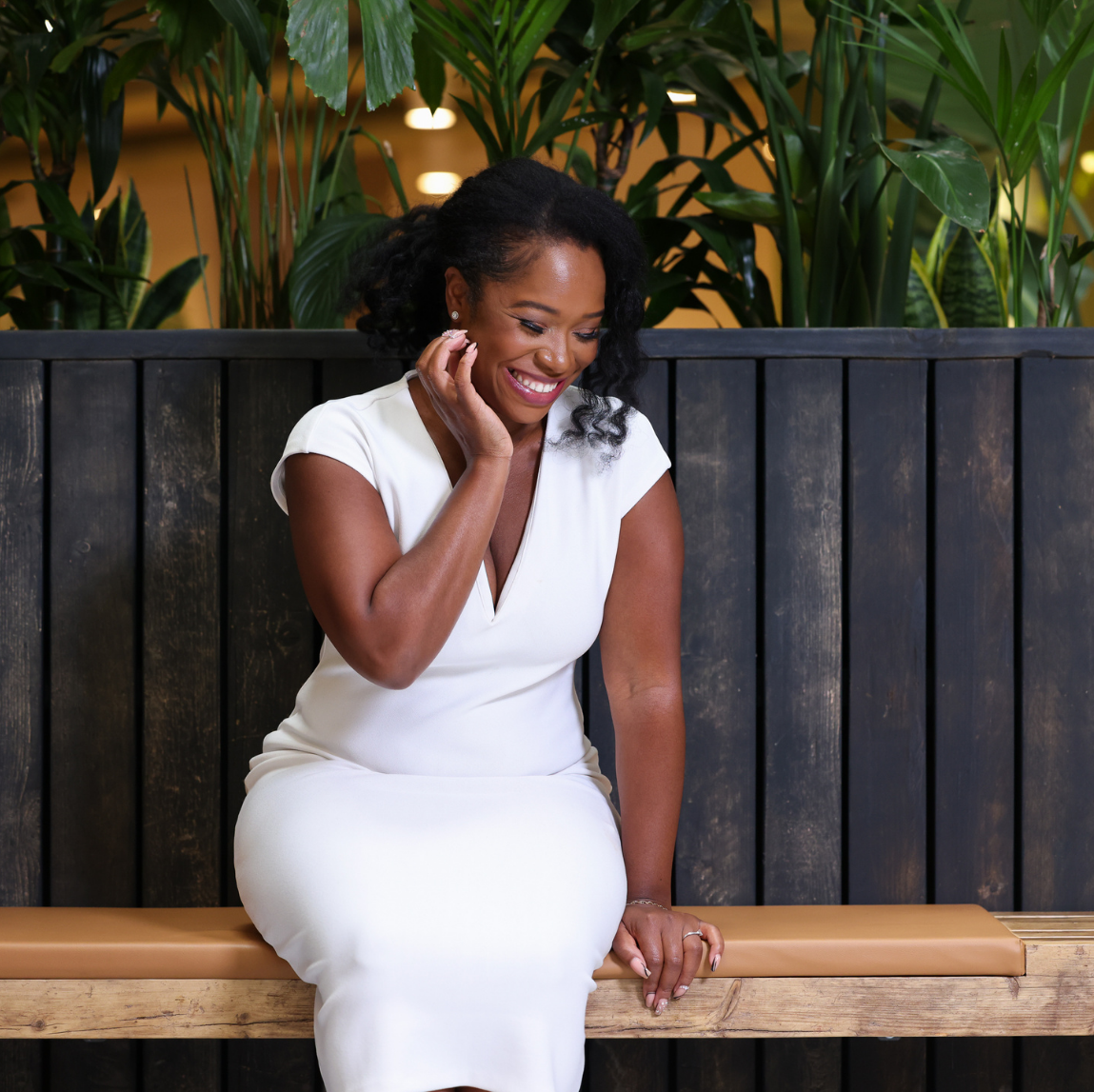
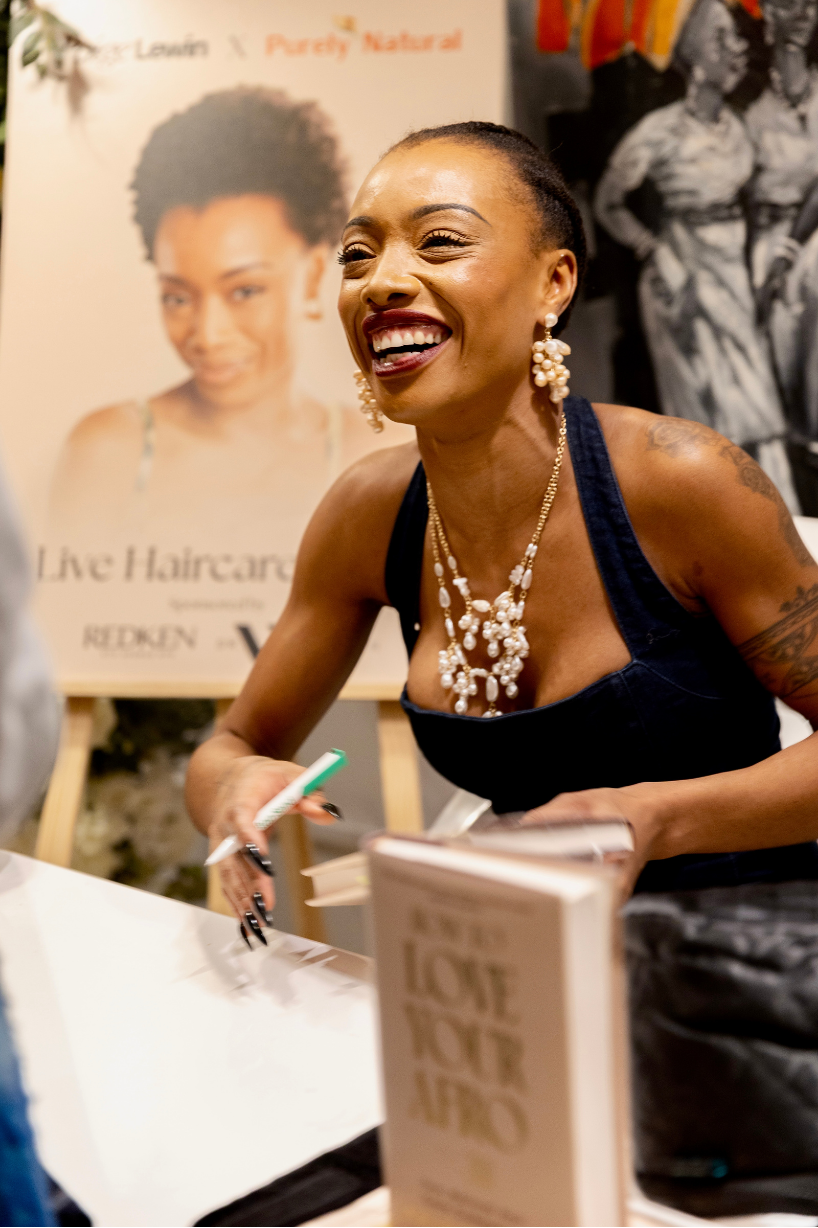
Kameese Davies (right), Nylah, ©Lensi Photography Paige Lewis (left), Photography By Anne-Marie Konadu
Within the Black community, hair has always carried memory, and with it consequence. For both Paige Lewin and Kameese Davis, hair education is about repair and advocating for a generation of Black consumers as “educated buyers.” Listening to Paige and Kameese in interview makes it clear much of what we’ve inherited was built out of necessity and accessibility, not always choice. Their work speaks to a collective pause: recognising how DIY culture, misinformation, and industry neglect collided; and how as a result proper education integrating hair-science and cultural care need to move in tandem.
This piece honours our growth, and asks what responsibility looks like now that we know more, or very much should do.
Paige Lewin is a journalist, presenter, creator of Texture Talks podcast, and founder of Team Texture community. Adding author to her repertoire with How to Love Your Afro, it was birthed from witnessing the long-term impact of issues such as DIY culture and stylist trauma on Black communities. Paige developed her work to close critical knowledge gaps with accessible guidance that empowers consumers to care for their hair with confidence, clarity, and due diligence. With a focus on mindset, language, and long-term hair health, her work challenges misinformation while empowering Black consumers to make better choices. Rooted in years of research, collaboration with trichologists, dermatologists, industry professionals and lived experience, Paige advocates for education as the foundation of truly loving Afro and textured hair.
Kameese Davis is the founder of Nylah’s Naturals, a Black-owned, science-led haircare brand created in response to the lack of safe, effective products for textured hair. What began as a personal search for solutions to her daughter’s scalp concerns evolved into a deeper investigation of ingredients, formulation science, and long-term health impacts. Nylah’s Naturals blends cosmetic science with cultural understanding, prioritising scalp health, transparency, and education. The brand is rooted in empowering Black consumers to move beyond trends and make sustainable haircare choices.
The DIY Culture
Hair is inseparably linked to health, beauty and consequence, especially within the Black community. “The knowledge that we didn’t have, I believe, is the reason we ran to DIY,” Paige says, “either that, or the knowledge a stylist didn’t have which traumatised us.” Kameese arrives at the same truth, “I really couldn’t find a hair care product for our hair texture. For the first time in my life, I started to really scrutinise the labels.” Both moments begin with absence, both lead to action. “That’s why we said, ‘No, I’m not listening to anyone else, I’m going to take control of the ting,’” Paige adds. But control without context has limits, making it another construct of false empowerment. Rules change: “Correct information is not trickling down to the consumer, the DIY of 2011 can’t be the DIY of 2026.” Kameese reveals this is mirrored at formulation level; “When I initially started, I was a DIYer, but there’s a lot of science that goes into product development.” Good intention does not override the chemical processes involved in creating something beneficial to our hair. “Unfortunately, it’s gone too far,” Paige explains, “what I mean is there have been developments and educational leaps and bounds made in Afro haircare. It’s not that we can’t take our hair care into our own hands.”
Paige is gentle, but direct, “We need an upgrade of information before we go into the kitchen mixing things up. Sadly, the influencer landscape is also not upscaling their knowledge, otherwise it’s the blind leading the blind, in the sweetest way possible.”
DIY culture has a lasting impact: consumers demanded safer products, opened questions around product transparency, and gave space for Black-owned brands, where feedback from consumers fuelled R&D in new product lines. Discourse around harmful ingredients and cultural knowledge gaps kicked off the era of ‘clean beauty’, encouraging ingredient consideration and seemingly empowered consumers. With conversations around endocrine disruptors, scalp sensitivity, chronic inflammation and other impacts, Black consumers increased expectations around product safety, long-term health, and cultural authenticity. With mistrust caused by years of poorly formulated products marketed to Black communities, Black haircare again became an act of rebellion and self-determination. Kitchens turned into laboratories and the financial hit to mainstream companies forced a shift in the market. But many people were still missing the mark on accurate information and hair knowledge.
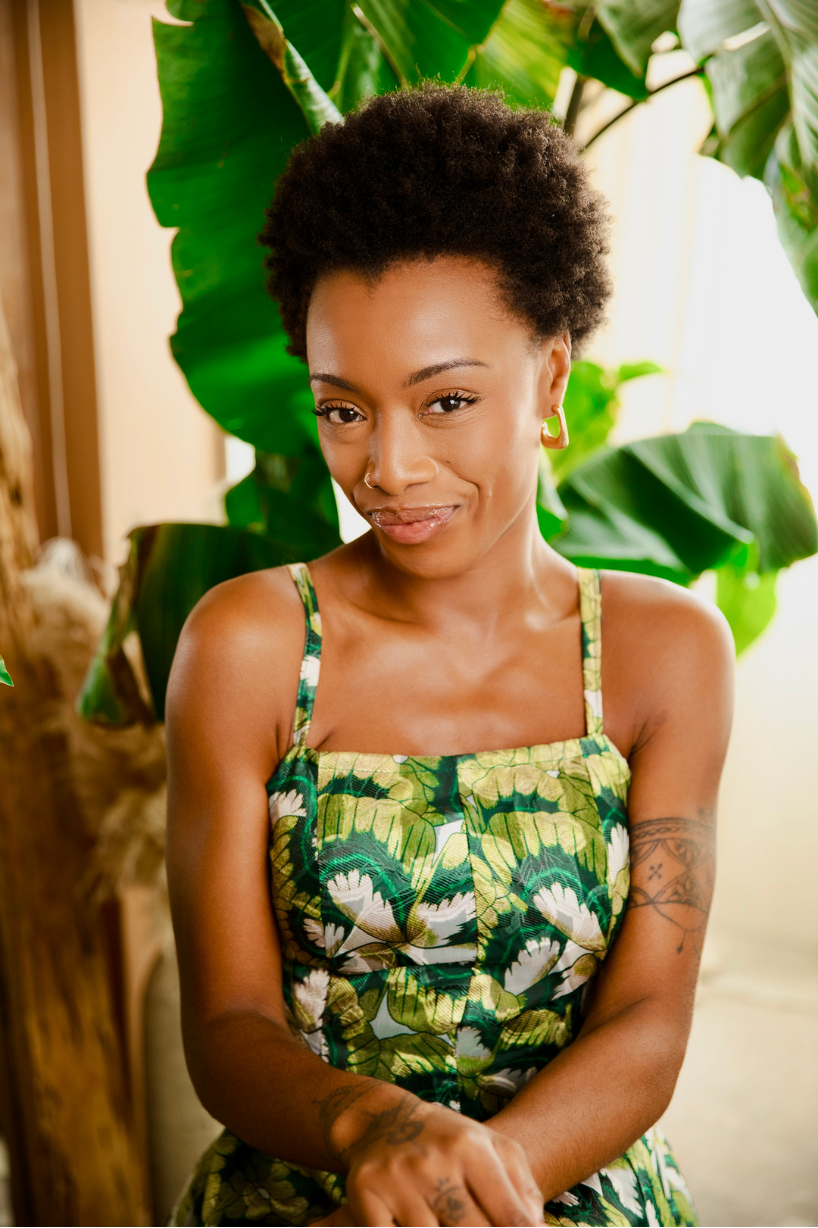
Paige Lewin, Photography By Anne-Marie Konadu
Misdirected Hypervigilance
“Loads of formulations were derived from kitchen cosmetology,” Paige says, “and then marketing leans into that, for example the banana ranges.” The message is subtle but powerful, “People think, ‘I’ll just get a banana and put it on my hair.’” Paige pauses and powerfully quotes, “Unless your afro has a digestive system, you’re wasting your time.” The sharp rise of no-nasties, vegan, organic, and plant-powered buzzwords were fueled by DIY-informed consumers, which pressured brands to remove parabens, sulfates, silicones, and more: yet many consumers avoid them without full knowledge of what they all really are. Professionals became constrained by public fear of ingredients such as ‘alcohols’, when not all of them are damaging to the hair. “There are people who need sulphates,” Paige emphasises, “but consumer perception says, ‘If it says sulphates or silicones, I’m not using it.’ It’s cyclical- it started with us, and brands followed the money.” But blame is not linear, “Consumer perception will run the ting,” Paige explains, “brands know if it looks good by our standards, we’ll buy it.” Going into companies' roles in the complex market, Kameese names what sits underneath, “What larger beauty companies were exploiting was our lack of awareness.” Whether buying or creating, without the right education it can do more harm than good. Case in point, the saponification process is readily available online to make homemade cold-pressed shampoo bars, but Kameese explains, “The pH level of these are too high for the integrity of your hair strands; it degrades the fibre of the hair.”
Kameese challenges, “Natural doesn’t always mean healthy. There are a lot of things in nature that can actually harm you. We have to be really careful when making products at home and when we’re buying ‘natural’ products.” Continuing on the point, she goes deeper, “People use them plant-based oils incorrectly; heavy oils like castor oil are too viscous to penetrate the scalp, instead sitting on the surface, disrupting its natural processes and sometimes feeding malassezia, the fungus linked to dandruff.” She points out quality and safety concerns within the natural beauty market, “I’ve seen instances where people are using rancid oils, I know because I can smell them, but because they’re labelled as ‘natural’ they’re being sold, even though they’re not following proper cosmetic guidelines.” Another instance of good intention without proper scientific knowledge, “If essential oils are put into a product at a really high inclusion rate, that can actually cause irritation and burning,” Kameese explains.
There should be a clear distinction between when DIY and avoiding perceived ‘nasty’ ingredient groups felt justifiably necessary, and when it became not enough. The language of ‘natural’ has opened eyes yet simultaneously complicated things. Paige agrees and instead calls for transparency within hair education; “Stop deciding what information is important, just give us the facts… water is a chemical, so don’t tell me all chemicals are bad.” Instead, she teaches literacy, “Look at the first five ingredients, that’s what the formulation is largely made of.” Shifting the consciousness from passive buyers to informed selectors, Paige advocates consultations; “Start with a professional. You build your foundation, then you can play.”
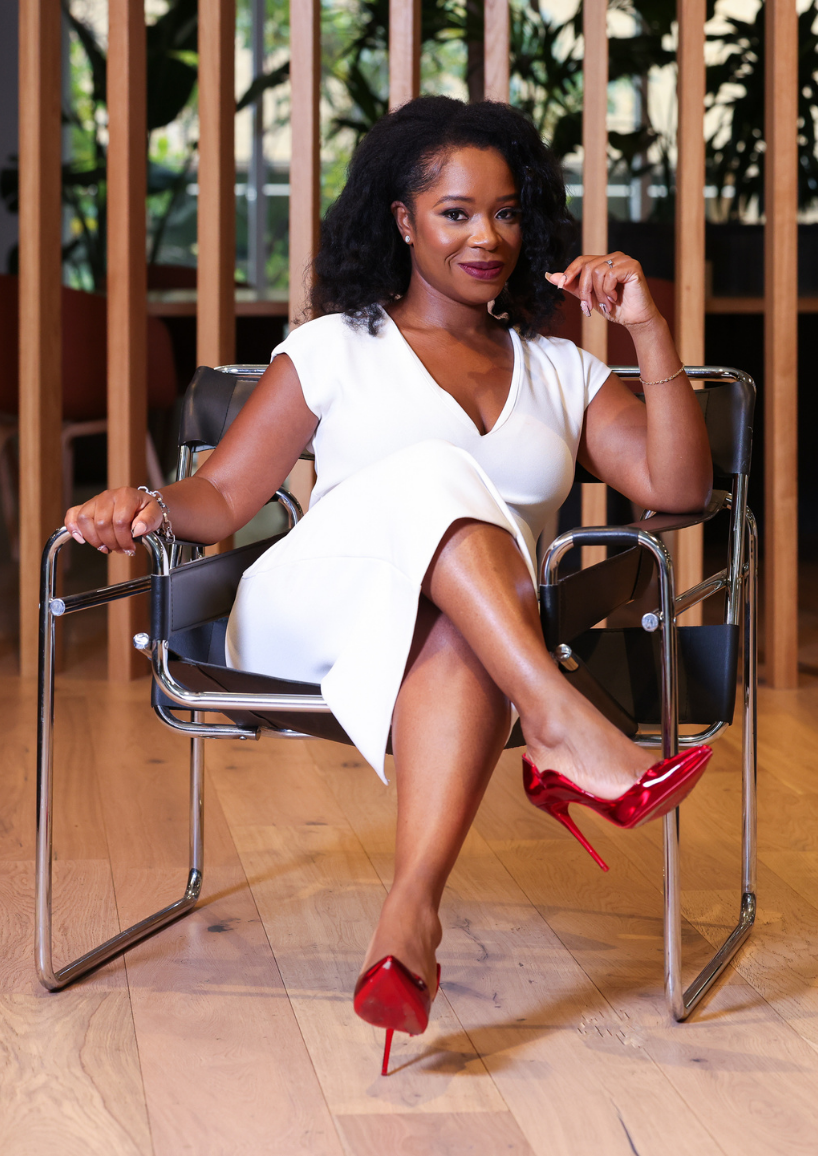
Kameese Davies, Nylah, ©Lensi Photography
Gap in the Market
Identifying a clear gap in the market, Kameese Davis’ journey began at home with her daughter. “Nylah had seborrheic dermatitis when she was an infant. It was relatively easy to find products that wouldn’t irritate her skin, but I couldn’t find a good product for our hair texture.” Davis became deeply aware of ingredients and formulation, expressing, “I started to, for the first time in my life, really scrutinise the labels and have an understanding of what does this long word mean, where does this product derive from, and what are the impacts of putting this on our hair and skin?” Through that process, she uncovered troubling patterns, “A lot of the raw materials that I was typically using as a Black woman were primarily towards the heavily toxic score. That was the catalyst that led me to see the need in the UK for a product that was highly effective for afro hair, but also didn't contain any of the crap we had become accustomed to using.” With clear boundaries in place, Kameese took the next step: “Once I had that list of the raw materials that I absolutely will not use, I started contacting cosmetic scientists who were willing to work within that framework.”
Physical and Psychological Healthcare
Paige contextualises what people sometimes fail to remember, "When you understand that your hair is dead when it comes up out of the surface of your scalp, you realise all you can at that point is maintain it. Hair growth is a non-essential tissue, the body will always prioritise survival first.” It is essential to understand hair health as connected to nutrition, lifestyle, and wellbeing. One of the strongest overlaps in their thinking is this: hair health does not begin in the bathroom, “The most important thing when looking at your diet is understanding what your body actually needs,” Paige says, “A lot of people are not getting blood tests.” Instead, they are reaching for products, “You’re getting heavy shedding, your scalp is inflamed, and you’re doing up cream and butter,” she almost laughs, “and really, you’re just deficient in vitamin D!” Kameese statistically addresses a widespread yet overlooked, multi-pronged issue: “We focus on hair loss prevention and hair loss support because 50% of Black women will experience hair loss before 40, that’s huge! It’s mechanical, but also nutritional and genetic.” Paige supports this wholeheartedly, explaining, “When you want healthy hair, it starts from the inside before it surfaces above the scalp, that’s your diet.” This holistic understanding shapes Kameeses’s approach, “We encourage women: unless your baseline vitals are in the right place by taking nutrition that supports your wellbeing and your hair growth, it doesn’t matter what you’re putting on topically.” That philosophy guided product development to the Nylah range; “When we developed our supplements, we worked with a Black pharmacist and a dietitian to design products that met the nutritional needs of Black women- I’m not just selling products; I want them to work.”
Read the full interview by purchasing our second print magazine here.