
Are Black Brits Politically homeless?
2020 saw an awakening of Black people globally engaging in political action. From protests in the US, Europe and Africa following the murder of George Floyd, to the rise of Black activism in America with the Black Lives Matter movement, and the Black Equity Organisation being launched in 2022 as the UK’s first national and independent civil rights group. Black people in Britain ensured to vocalise a strong opposition to systemic racism and called for social justice across the Black diaspora.
The rippling effects of Black political action saw Britain's only Black national newspaper, The Voice, complete the biggest research sample of over 10,000 Black Brits to highlight themes that matter to Black people. The Black British Voices report found 94% of its respondents believe the UK government is not taking sufficient action on behalf of Black Britons.
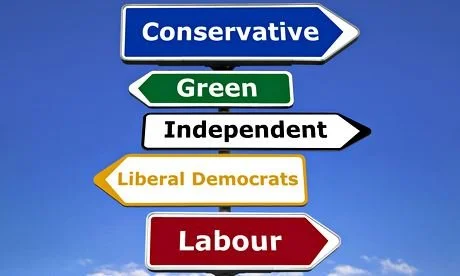
Credit: Alamy
According to the 2021 Census, that is around 2.5 million Black people in the UK who feel disconnected to British politics and political identity.
A statement that has resonated with me deeply and that provoked me to examine the political climate as a Black person, was Journalist Habiba Katsha’s opinion piece where she wrote ‘As a Black woman I feel like an afterthought for many politicians. For the first time, I feel politically lost.’
Political apathy is a state of indifference, disinterest or lack of enthusiasm towards political processes, but the feeling of political homelessness is about an individual or group feeling alienated from political parties, ideologies and political discourse entirely. An experience of loneliness and no core identity to support within a democracy.
The Electoral Commission's research into the 2024 general election cites below 50% turnout from constituents in some of the most ethnically diverse constituencies like Croydon, evidencing a growing sense of political apathy stemming from disillusionment with British politics and what politicians offer Black people.
I’m not alone in thinking that my allegiance to any political party is yet to be formed as a home for my political voice hasn’t been created or even accurately represented.
Political and cultural commentator Kamsy Obijiaku agrees that Black people have become an afterthought to politicians but believes this is not a result of Black political apathy but rather frustration with the lack of meaningful Black representation in the political sphere.
Despite political power shifting to the left of the political spectrum, the Labour Party -which has traditionally been the home for Black voters, having gained 68% of Black votes- is facing a wave of disillusionment from Black people who are experiencing political apathy.
48% of Black and ethnic minority votes polled by YouGov in 2024 cited a distrust in politicians and a lack of relatability. Obijiaku argues, this is a factor for Black Brits deciding not to align themselves to any political party. She said: “Labour is framed to appease the Black community and the Conservatives party is framed for entrepreneurship.The assumption is we are in the Labour party but no one is considering where Black culture is pushing us or doing the research to find out how Black people vote. There is no party that represents Black people, especially African and Caribbean communities individually or collectively.”
While working alongside policymakers and politicians, Obijiaku has noticed the lack of Black representation at roundtables and public affairs events expressing how she feels that “it’s a room that’s been tailored to everyone but the Black community.”
Although the current parliament is the most diverse - with 90 MPs elected from an ethnic minority background, that only makes up 14% of MPs. Obijiaku argues there are not enough Black politicians in the British political system due to the First Past the Post electoral system delivering disproportionate results which contributes to the feeling of apathy amongst Black Brits. In her view, the Black community are very political when expressing issues of concern but are battling with pushing through a glass ceiling system that tells them their vote counts while feeling it contributed to no change.
“We are looking for new political homes, because I don’t think the political system in the UK reflects Black voices. We want to get involved but we just don’t know where to go and who to vote for.” She says.
The Rise of the Right Wing Ideologies
With the rise of right-wing ideologies like the Reform Party speaking to marginalised White working-class people and the new Prosper UK party trying to attract politically homeless centre right wing voters, some Black people feel the Conservative party’s representation of Black voices appears tokenistic and always on the opposite side leading the argument against racial justice. Joseph Harker, Senior Editor for Diversity and Development at The Guardian, notes an unprecedented shift to the Green Party amongst Black voters.
Whilst the Green Party only claimed 8% of Black votes in 2024 election, Harker believes the Greens - known for their emphasis on social and environmental justice - will receive an influx of Black voters at the local elections, he predicts the local election results will see Reform and the Green party as the two biggest parties, while Labour and the Tories lose a massive number of seats. Harker suggests the shift towards Labour in the 2024 elections was born from a failure of Brexit, Partygate and also Liz Truss’ leadership unwittingly painting Labour as a better option.
The Labour Party’s reliance on race equality policies
Former Editor of the Voice, local politician and race equality campaigner, Lester Holloway attributes the fragmentation between the Labour party and their Black voters on the government “relying on a piece of legislation connected to race equality and putting legislation into place as an act to tick the box”. Holloway notes that whilst the Race Relations 1965 Act has been positive, issues affecting Black communities such as maternal health, homelessness, and stop and search have, in reality, gotten worsened over time.
Representation is no longer just about numbers. Despite 2024 delivering Britain’s most diverse parliament, questions remain over who is truly advocating for racial justice beyond figures like Diane Abbott, Bell Ribeiro-Addy, Dawn Butler, and Clive Lewis.
Holloway warns the Black vote is becoming increasingly volatile. After backing the Liberal Democrats in 2010, many Black voters felt betrayed by austerity policies introduced during the coalition government. By 2024, only 6% supported the Lib Dems. Support then shifted during the Jeremy Corbyn era, and is now rising for the Green Party under Zack Polanski. Holloway argues that if the Greens also fail Black communities, the political disillusionment could be profound.
Resolutions for Black political homelessness
For Black Britons experiencing political homelessness, solutions lie beyond traditional party loyalty. Support can shift toward smaller parties, local campaigning, and grassroots organisations such as Operation Black Vote, The Africa Centre, Voice4Change England, and My Life My Say, whose Young and Black campaigns encourage political participation and civic engagement among young Black people.
The Black Voice will produce influence
In my view, Black Brits are navigating a separation from partisanship politics and embarking on a quest to find new political spaces that reflect their experiences. Growing frustration with mainstream politics has increased pressure on parties to tackle political apathy and reconnect Black voters through genuine engagement and not rhetoric. The message is clear: politicians must speak directly to Black Britons, not simply about them. At the same time civic participation remains crucial for holding power to account.
Commentator Esther Krakue says “If you live here and pay tax here, you’ve got a stake in how this country is run, regardless of whether any party feels like ‘yours’ the point of getting engaged isn’t waiting for someone to perfectly reflect you back or you’ll be waiting forever. It is making sure your voice is heard somewhere.”
Maya Wolfe-Robinson told me, “In times of growing division, it’s more important than ever that our voices are present in the debates, and that we argue for the world we want.”