
Clara Amfo On New Docuseries ‘Mission Motherland’
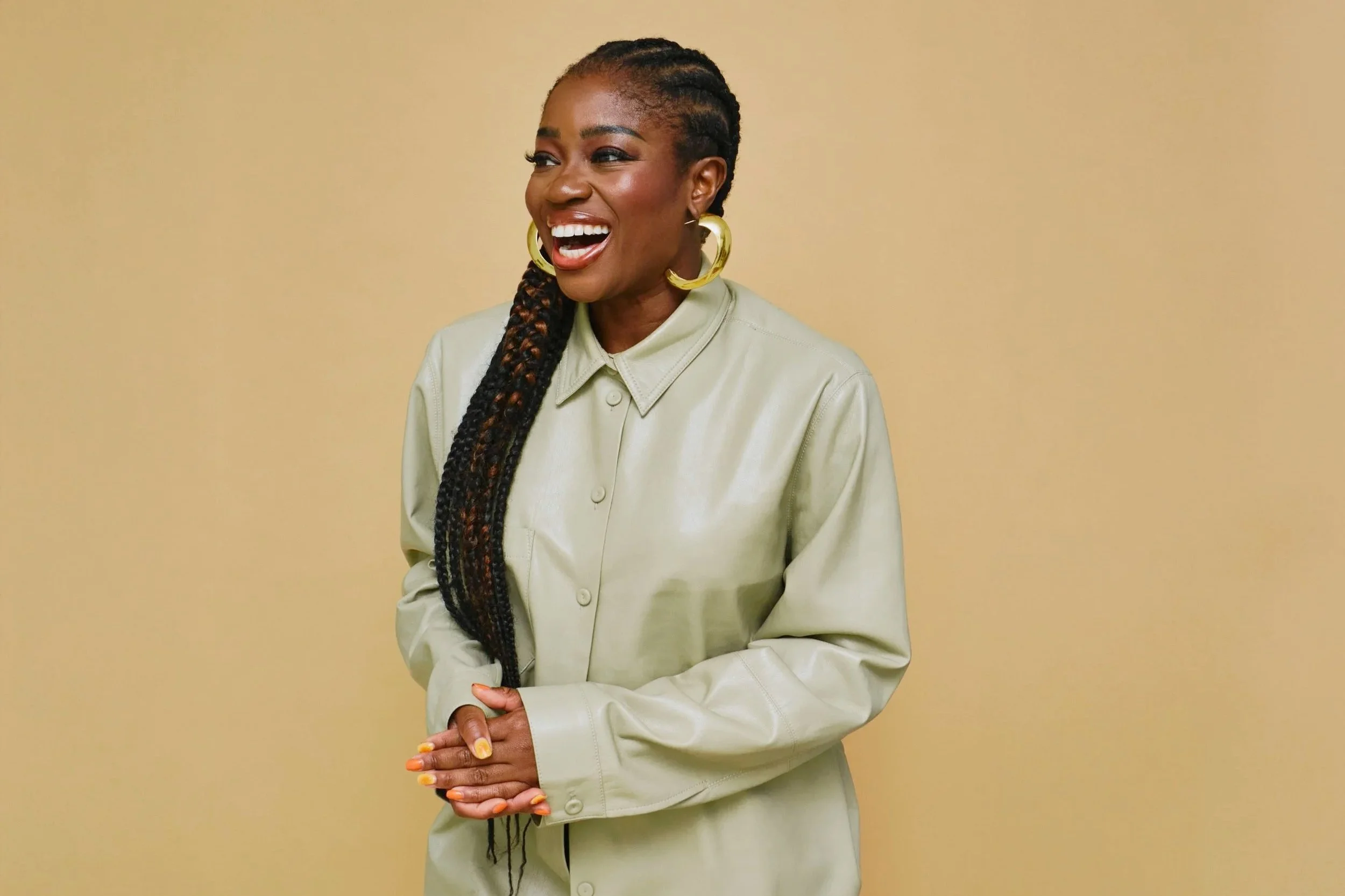
In the BET documentary Mission Motherland, renowned radio broadcaster, television presenter, and podcast host, Clara Amfo travels to Ghana alongside her brother to explore the country’s rich culture, reconnect with her roots, and deepen her understanding of her ancestral home and identity.
Clara reflects on the intertwined themes of family and grief, while proudly drawing parallels between being born and raised in the UK and her Ghanaian heritage. She examines the evolving meaning of family, the reality of representation, and the need for more authentic visibility within the media landscape both in the UK and abroad. Clara’s deep reflections prompt audiences to explore their own identity, unpack how they show up in the world, and consider how they view themselves.
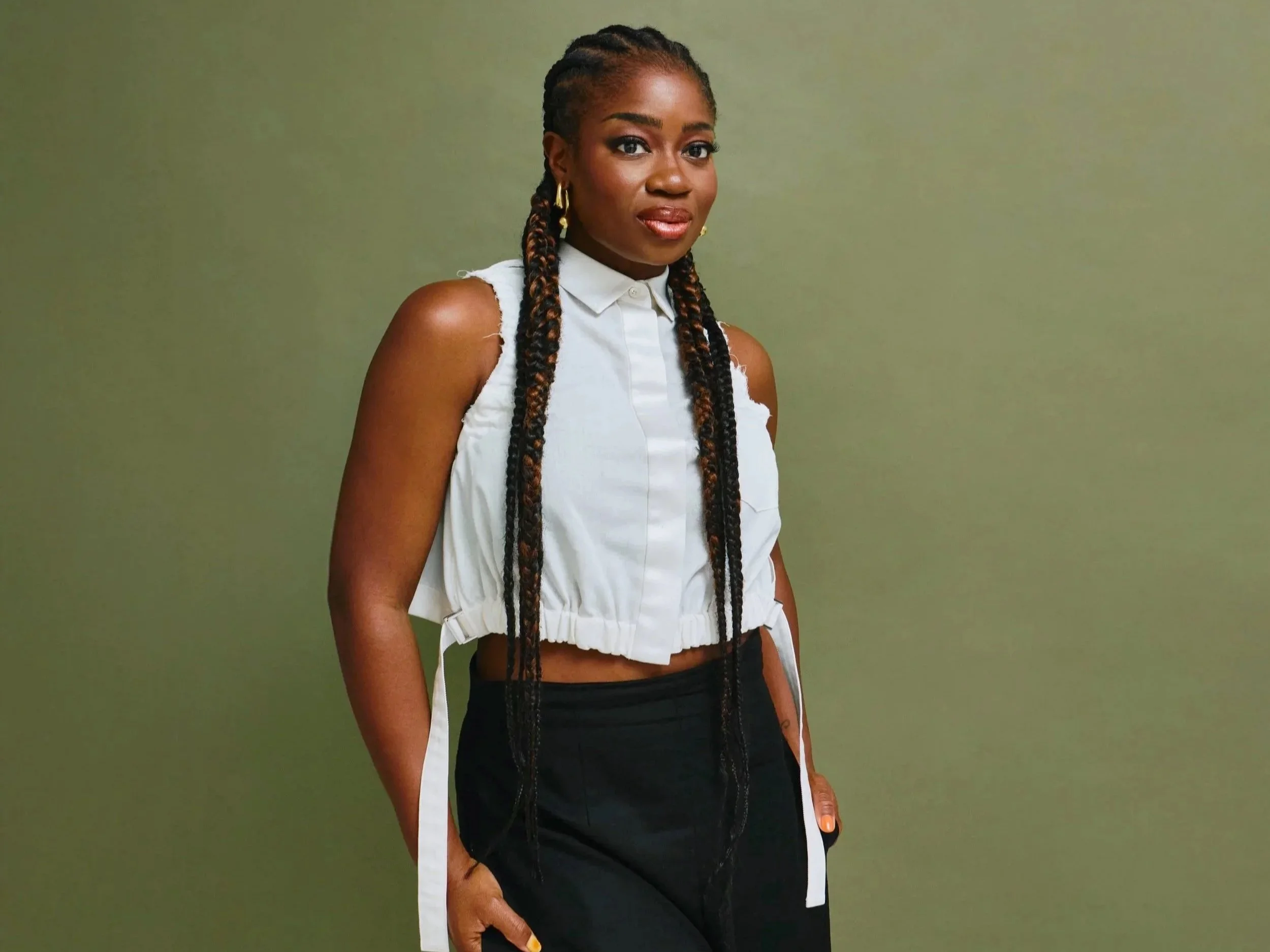
Photography by Ejatu Shaw
Growing up in a diverse environment and then visiting a place where everyone looks like you - how do you think that shapes us psychologically and your sense of identity?
I’d say it’s empowering. In general, wherever you’re from, there can be simple biases made about you. For example, based on what you do for a living, growing up, my mum was a dinner lady and a cleaner, and I witnessed firsthand how awful some of her coworkers could be towards her. I didn’t have the language for it back then because I was a kid, but it was racism. There were assumptions that she wasn’t very bright, and it was in the way they spoke to her, they thought they could get away with it because she was a Black woman in a service job.
If she had those same jobs in Ghana, I just know she would have been treated differently and better. That’s not to say bias doesn’t exist everywhere, but to answer the question, one of the things I love about being in Ghana is that it’s not unusual to see a Black person as the headteacher, the cleaner, the dinner lady, the police officer, the sporting superstar, the local gardener, all of it.
When you are the default in a country, you’re not thinking, “that’s the Black schoolteacher” or “that’s the Black footballer.” You’re just thinking, that’s that person getting on with their job. In the UK, it feels much more racialised. You can sense the difference in how people are perceived and treated based on their skin colour and the jobs they do. Psychologically, the biggest difference for me is the sense of ease. There’s an ease that comes from not having to explain why you’re in the room. I’ve hosted international, high-profile events where people have assumed I’m the assistant - not the lead host or broadcaster.
I’ll never forget working in Cannes one year. I was hosting a major event for a big brand, and there was a woman at the door who wouldn’t let my team and me in, even though I had all the credentials. It took a white French woman stepping in for us to be allowed into the venue. There was no apology, just visible embarrassment. She clearly couldn’t believe that I, a Black woman, was there to host this international event. And in my head I was just like, right… cool. Got it. It’s that kind of thing that affects you psychologically, because you’re constantly aware that you’re seen as “other” in a lot of spaces, even in places you feel you belong. It’s sobering.
That’s why I always feel at ease in Ghana. I never feel like I have to explain myself. I’m just there.
In the current political climate, phrases like “go back to where you came from” are often used to challenge people’s belonging. Having been to your ancestral home, how do you make sense of that phrase now and what would you say to someone affected by it?
When I hear phrases like “go back to where you came from,” I feel like there are actually two places I can claim, and I feel empowered by that. I can claim the UK and I can claim Ghana. I’ve even got the two passports to prove it (laughs).
On a more serious level, I can only speak from my experience, but when I’ve heard things like “go back to where you came from” or “tell me where you’re from, where you’re really from,” it’s usually coming from a place of confusion: you’re not white, but you have a British accent, and I don’t understand that, so I need you to explain yourself. There’s a kind of arrogance in that question, and there’s also something quite aggressive in the phrase “go back to where you came from.” So, going to Ghana, how do I make sense of that now? I’d say I take it as, yeah, I can go back to where I came from in Ghana, and I can go back to where I came from in the UK, because I was born here. I’m a British citizen, and I’m Ghanaian by blood. I’ve been lucky enough to be raised with Ghanaian culture while living in the UK and that’s okay.
To anyone who’s been on the receiving end of that phrase, I’d say this: anyone who says it with that kind of vim is showing more about themselves than anything else. It’s not thoughtful, it’s not informed, it’s just a lazy attempt to insult someone. And the reality is, there are so many reasons why people are where they are. Some people in the UK right now would love to go back to where they’re from, but they’re here out of necessity, because of conflict, or finances, or circumstances beyond their control. There are countless reasons people live in places they weren’t born in.
Wherever you call home, that can exist in more than one place. It can live in your heart, and it can be where you lay your head at night. You belong where you are. You’re a citizen of the world and yeah, maybe that sounds a bit hippy, but it’s honestly how I see it.
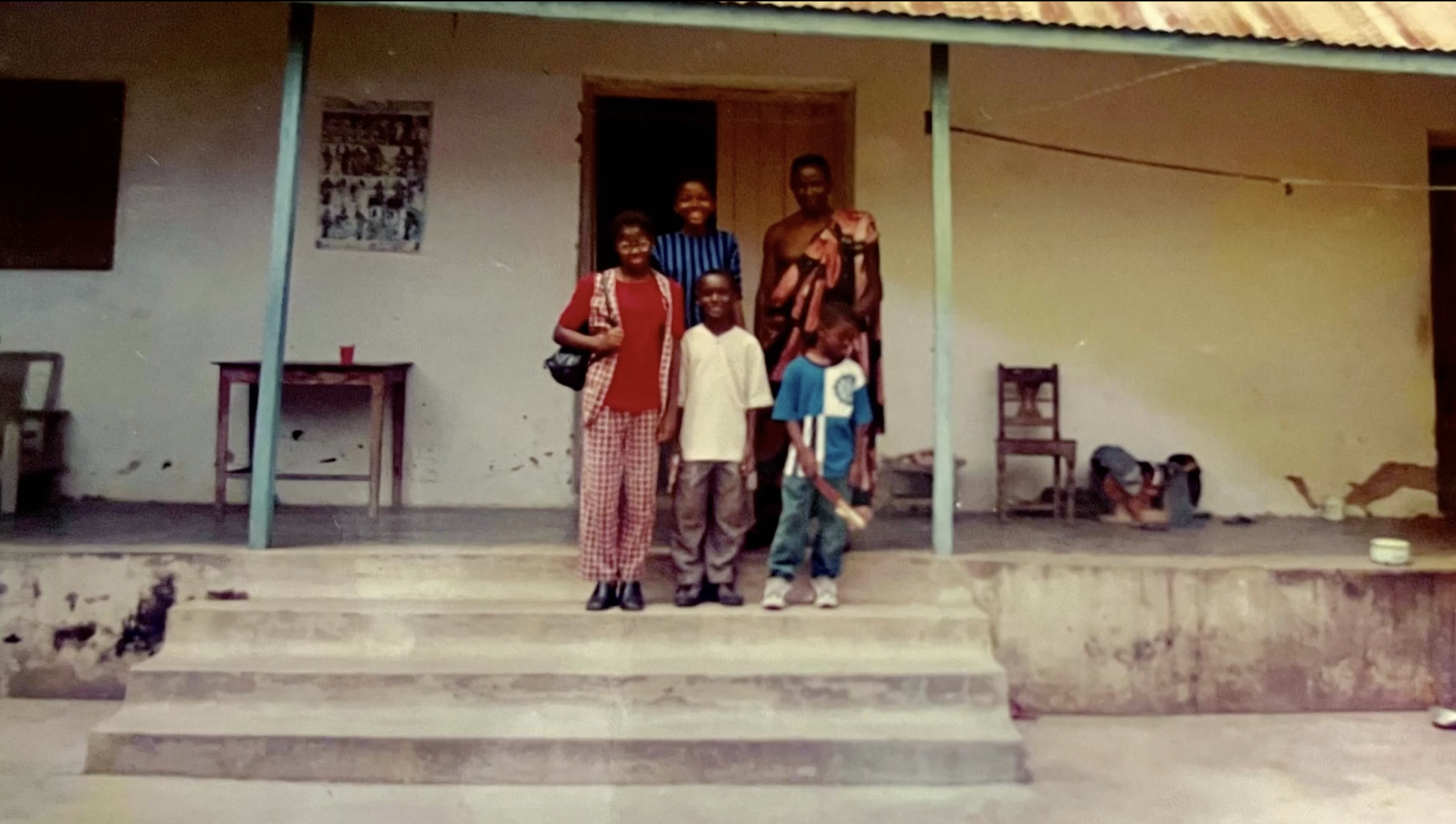
Clippings from BET UK’s docuseries, Mission Motherland.
Your parents were in their late twenties/thirties when they moved over 3,000 miles to the UK. Can you imagine making the same decision? Knowing that they did this journey, made those sacrifices, how has that affected your perception of your parents?
Knowing the journey my parents took and when they took it, has given me a whole new level of respect for them. I don’t have a single friend in the diaspora who hasn’t heard some kind of horror story from a parent, auntie, or uncle about how they were treated when they first moved to the UK, whether that was in the 70s, 80s, or early 90s. and honestly, even now, depending on where you go, it can still be like that.
For my parents, being here in the UK in the 80s and 90s, thinking about the political climate at the time… it just makes you realise how much bravery it must have taken. to leave a small town or village in Ghana and come somewhere you don’t know anyone, just for the hope of building a better future, for yourself and your children, that’s incredible. It takes a lot of courage, and not even naivety, but almost a kind of childlike hope to make that leap. I really, really respect them for it.
I try to imagine making the same decision, and I think I could, but the difference is, I’m doing it from a much more privileged position. Because of the life my parents built, which then gave me the opportunities I’ve had, I know I’d face far fewer of the challenges they did. That in itself is a privilege. So I’m genuinely grateful for their bravery. I love my life, and I wouldn’t have it without them or the sacrifices they made.
Why was it important for you to start the trip by visiting where your grandmother grew up and where your father was raised? Why begin there instead of ending the trip there?
I wanted to start it there because thematically it just fits the tone of the documentary. it would’ve felt strange to go backwards. Starting there felt imperative to really understand the roots of who we are and to tell the story properly. When you see where and how my parents grew up, small town, tiny classrooms, local trades, nothing massive or industrial, it’s a very specific, almost rudimentary way of life. That’s just one slice of Ghana. You compare a place like Chiquiti to Accra, and Accra is bustling, modern, just completely different.
If we’d started somewhere like Accra and then gone back, I don’t think it would’ve given the viewer the full narrative context of what Ghana is in all its contrasts. It wouldn’t have landed the same way. That’s why I'm happy we started there, because that’s literally where our story begins. My brother and I were just twinkles in our parents’ eyes in that village, even in my grandparents’ eyes at that point.
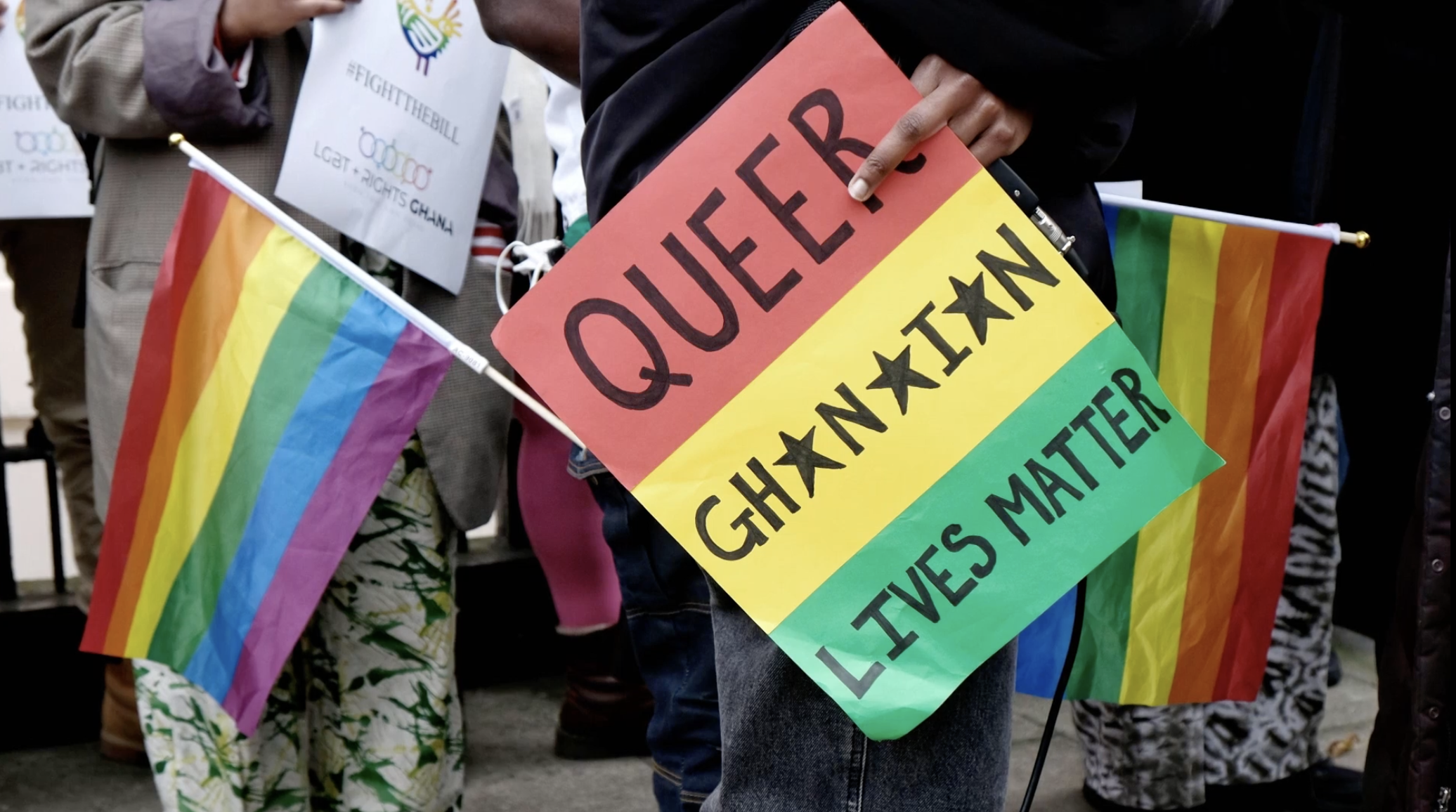
Clippings from BET UK’s docuseries, Mission Motherland.
There’s a scene in the documentary where you’re sitting with family, sharing food, and talking about your father and uncle becoming celebrities after they passed, with their images surrounding you - on key rings, posters, and throughout the space. Describe what that moment felt like for you?
Talking about my dad and my uncle - may they both rest in peace - is something that, yes, carries sadness, but it also brings me a lot of joy because they were great people. Being able to talk about them with other members of my family, for me, that’s the whole point.
I think when we talk about grief, people often imagine the wailing, the really visible, dramatic sadness and don’t get me wrong, that exists in Ghanaian culture, but we don’t talk enough about the joy of having known someone, and being able to speak about them fondly with others who loved them too. That’s a gift.
I’d be devastated if, when I'm gone, my friends never spoke about me. I’d be like, excuse me? and I feel the same about my dad and my uncle. I think they’d want us to talk about them the way we did in the documentary. That moment, being with my cousins, who are like my sisters and my auntie, it just felt really grounding. It felt natural and honestly, it felt healing. You don’t stop loving people, and you don’t stop missing them when they’re gone. So being together like that… yeah, it just felt really healing to be together.
Visiting your father’s grave with your brother, you reflect on feeling peace after 11 years of grief. What does that peace feel like, and how has your journey from sorrow to that peace unfolded?
Visiting my dad’s grave with my brother after 11 years of grief was actually quite calming. I think it confirmed all the things people told me when I was first dealing with his death, you know, that time is a healer, that it changes, that you never miss them any less but you learn to live with it better. All those clichés people say… they’ve come to pass.
I felt a real sense of peace going to see him, because I know he’s at peace. I’ve been able to live my life, which was always one of my biggest fears growing up. I used to think, how will I cope when my dad dies? I was such a daddy’s girl. But I am coping, I’m living, I'm thriving and that’s something I never thought I'd be able to say. Of course, it’s been painful at times, and grief can still catch you off guard. That’s the thing about it, it’s sneaky. It hits you in moments you don’t expect, but visiting his grave gave me a sense of calm. It felt like checking in, like saying, “we’re still okay, we’re good.” Doing it with my brother was really meaningful too, because he hadn’t been back since the funeral in 2015. Being there with him and seeing how he’s grown and carried it as well… yeah, it just felt really good.
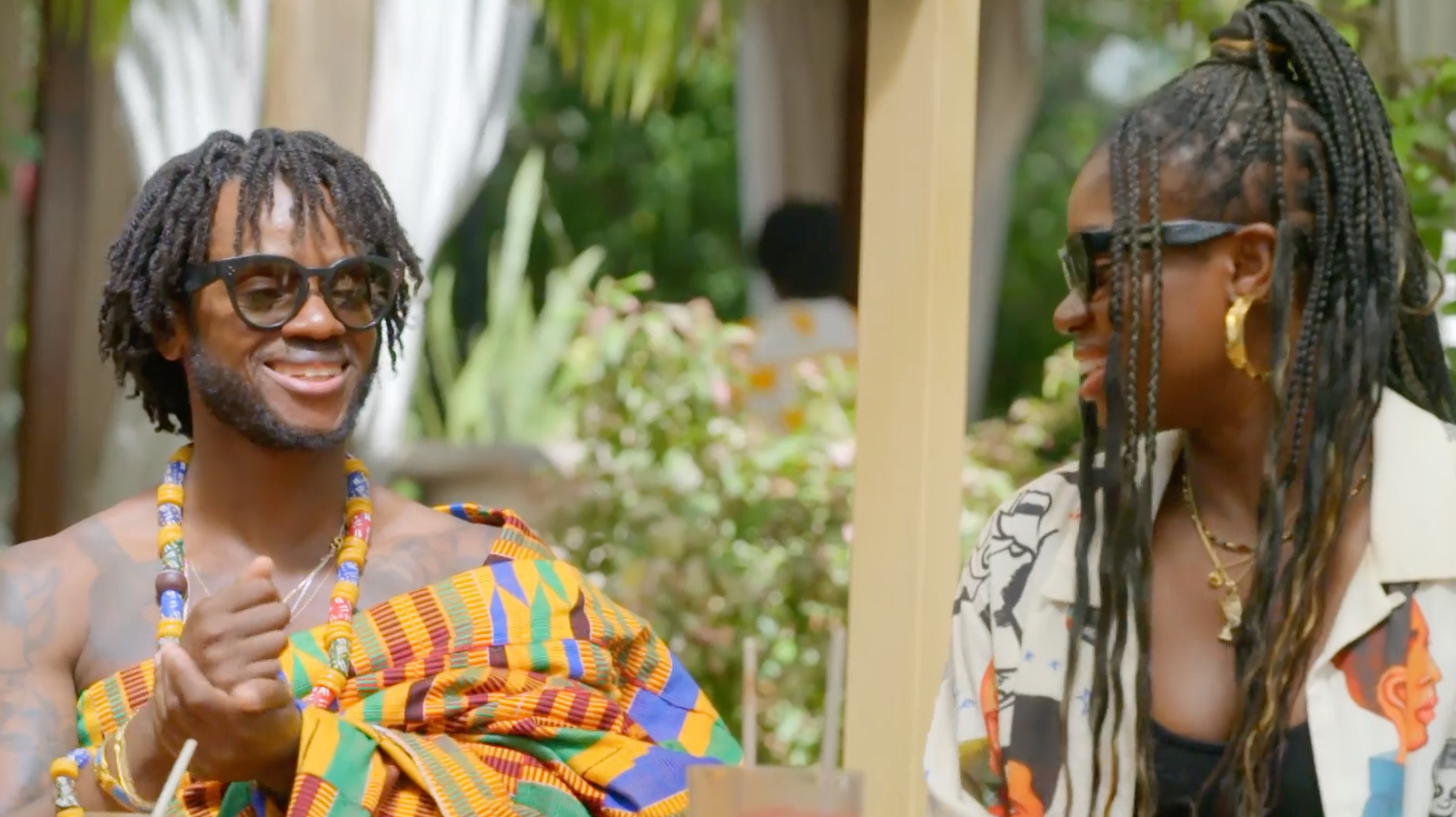
Clippings from BET UK’s docuseries, Mission Motherland.
How did this trip affect your bond with your brother? Did it bring you closer, and was it comforting to have a familiar face while reconnecting with your roots?
Chris is my best mate, he really is like one of my best friends. If we weren’t siblings, we’d definitely be friends. I’m really proud of him, he’s a good egg. Also not me saying good egg because obviously I know there's so many jokes about Ghanaians and our love for eggs but hey.
The trip definitely brought us closer and it was really comforting having that familiar face there. As much as we are Ghanaian, we were brought up in the uk, so there are still things about Ghana that surprise me in the best way and I love that. Experiencing that as a British-born Ghanaian with my sibling was special. Being able to just look at each other like “oh my gosh,” or laugh, or take something in together, he gets it. Seeing how Chris really leaned into the culture with my uncles, wearing the traditional cloth and everything, and then surprising my mum in it at the end of the documentary that was so heartwarming. She was so proud, he was proud and I just really loved seeing that.
In Ghanaian languages, there isn’t a word for “cousin”, your aunt or uncle’s child is simply your brother or sister. How does that way of thinking shape ideas of family and belonging for you?
Family comes in so many different shapes and forms. For me, family is about showing up for people, whether you’re blood-related or not. Being brought up that way has made me more confident in knowing that I can go back to Ghana and still feel like I belong. I know i’ll always have a place to call home, because I know there’s always going to be a cousin somewhere.
You are a renowned radio broadcaster, television presenter, podcast host, and voice-over artist. As someone who works both in front of the camera and behind the scenes, how far do you think we’ve come in terms of representation?
I’ve been thinking about this a lot lately, because I'm always looking forward - I rarely look back. However, after being at the Brit awards this year, I had a moment where I thought, you know what, Clara, you’ve done alright. You’ve hosted the Brit awards, you’ve had some incredible moments in your broadcasting career…and even recently, going through my website and doing admin, I've had to list everything I've done, and I was like, bloody hell. When you actually see it all laid out, prime-time telly, radio, film premieres, all of it, it does make you pause. But saying that, as proud as I am of those achievements, there are still glass ceilings, and I take real pleasure in breaking through them. I’ve worked hard to get through some of them, but there are still more to go.
I think we’ve come a long way in terms of representation, but there are still spaces where Black broadcasters are limited, or where people try to put us in boxes and I just refuse to be limited. I always have and so far, it’s worked out. It sounds cliché, but I've been underestimated so many times in this industry, and i’ve just gone ahead and done it anyway. I've always told myself: never count yourself out.
When it comes to representation, there’s still more to do and i’m going to do it, trust me. I want to see more diverse faces, and quite literally more diverse bodies, in front of the camera, behind the camera, and in the rooms where big decisions are made, not being held back at junior levels, but actually producing, leading, executing, because it affects the quality of the work. Things are better when you have different voices in the room and honestly, a lot of mistakes can be avoided too. This stuff matters when things are going well, and even more when they’re not.
Photography by Ejatu Shaw
In countries that are very restricted, why do you think activism remains so important, and what else do you think needs to happen to protect rights and push for progress?
That’s a really deep and great question. I think activism remains vital because basic human rights matter, it’s as simple as that. When I think about Ghana specifically, but also the world more broadly, it genuinely boggles my mind that we still struggle to treat people equally, just because of who they’re attracted to. I find that so hard to understand.
We touched on this in the documentary, but yeah it still feels bizarre to me.
When it comes to protecting rights and pushing for progress, it’s a tricky one. Religion plays a huge role in shaping laws in many places, but I also think parts of religion are often cherry-picked to justify harmful treatment of people. At the core of most religions at least in my understanding, it’s about treating others how you’d want to be treated. I’m paraphrasing, but that’s the essence. For me, if what someone is doing with their partner is consensual, not harming anyone, and has no impact on you, there are far worse things we should be investigating like: abuse of power, the safety of children, poverty, literacy, the list goes on.
So when we talk specifically about the LGBTQIA community in Ghana, like we did in the documentary, I just come back to that same feeling- the mind boggles. When people say it’s a “western agenda,” I have to pause, maybe roll my eyes a bit, because queer people have always existed, all over the world, long before certain belief systems were imposed and used to label them as wrong. That’s all I'll say on that.
The media often shapes how we see the world. You’ve said Africa is usually portrayed negatively, how is your work and this trip helping to change that perception?
I hope my work on this trip has helped to shift perception a little bit. So many people message me saying, “oh my God, i really want to visit Ghana, it looks so fun,” and that’s really lovely to see. but I think that shift has been happening for a while now.
Over the past five to ten years there’s definitely been a kind of cultural shift whether you like it or not. Things like “detty december,” people going to Ghana for christmas… i’m even seeing non-Ghanaians more excited to go to Ghana than Ibiza in the summer. It’s really interesting and I love seeing people get excited about the continent of Africa and also just recognising that it is a continent, for God’s sake.
There are so many more great stories to tell from Ghana and from Africa at large. It’s a never-ending well of incredible storytelling. Anything that I can do, or that my fellow Ghanaians and Africans can do, to show the world the different sides of it, I want us to do it with aplomb because it’s the representation we deserve. I really reject the idea of Africa being seen only through a lens of poverty or charity—“give them five pounds a month” kind of narratives. That’s not to say those realities don’t exist, but that’s only one part of the story. There are all kinds of people, all kinds of lives, across the continent and its countries and it’s only right that all of that is showcased to the world.
What kinds of stories or voices would you like to see more of in Ghana’s media landscape?
I think alternative voices that aren’t necessarily shaped by more conservative thinking, whether that’s around fashion, politics, sexuality, drama, or art are really important.
I love and want to know more about the Ghanaian surfing and skateboarding scenes. I want to know more about alternative Ghanaian art scenes, alternative music scenes—all of that. I just want to see everything that exists outside of what can sometimes feel like a very prim, proper, almost reserved way of presenting Ghana and that version exists, and that’s a beautiful thing. But I also think about how many different types of people there are, just look at the uk and all its subcultures. I really believe that exists in Ghana too. I just want those voices to be heard, for sure.