
Renell Shaw On ‘The Windrush Suite’: A Jazz Tribute To Black British History
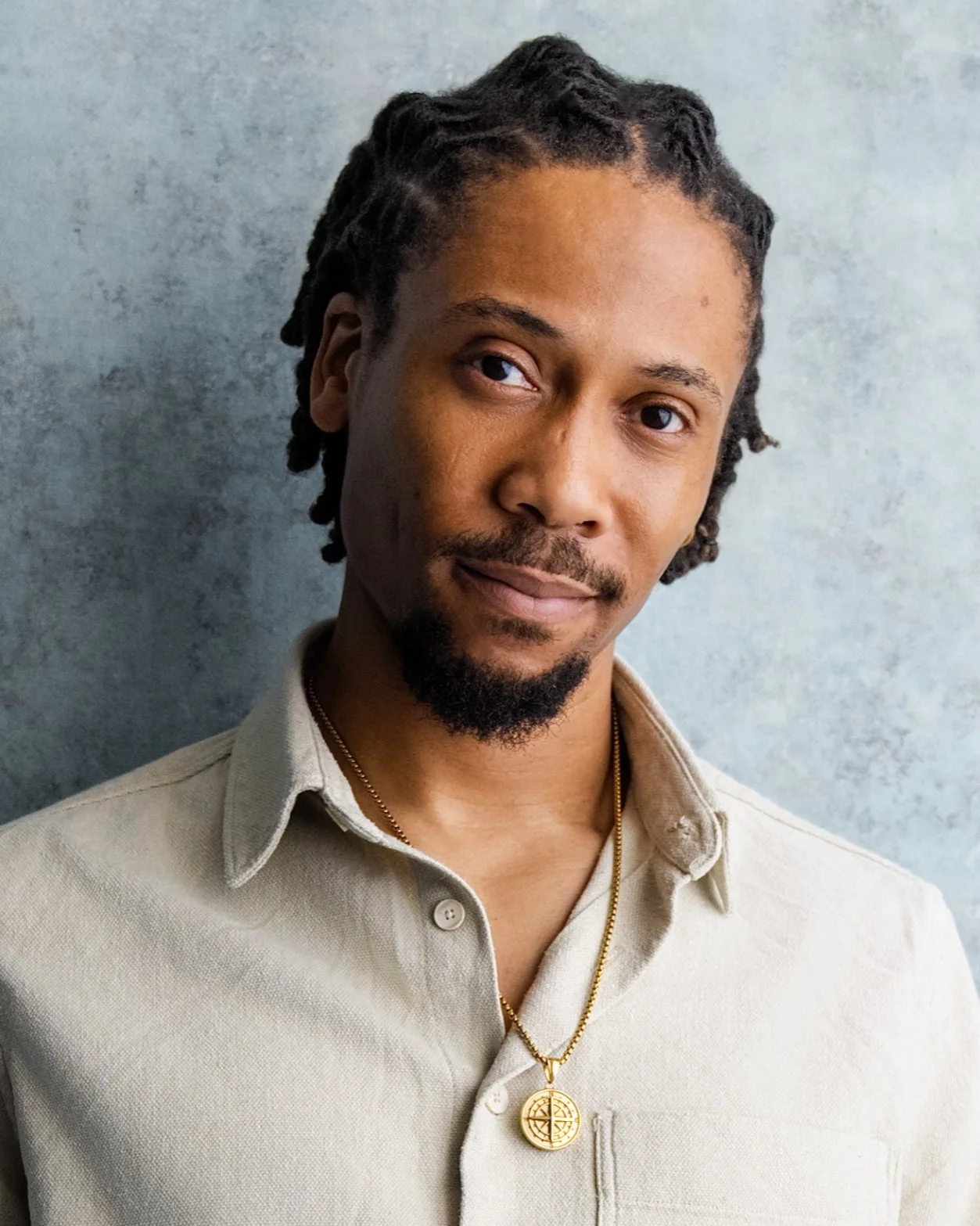
Sitting around the dinner table listening to stories from individuals from the Windrush generation, Renell flaunted about the gratitude he had not needing to buy a book, his grandparents invited him to a live performance. The 38-year-old musician recalls that some of his earliest musical memories began when he was just three or four years old. Sitting in his grandparents' living room listening to his grandad play the trumpet. Although he did not consciously understand the music at the time, he believes those experiences shaped his understanding of musical language and created a feeling that deeply influenced him. However, his active interest in music did not develop until he was around 13 or 14 years old, when he began playing the guitar and writing rhymes. Recognising his potential, his music teacher encouraged him to join the Artist Development Programme (ADP) at the Hackney Empire, where he had the opportunity to develop his skills in rapping, playing instruments, dancing, and acting.
“It was there that I met who is still my mentor today and one of the musicians performing on the 25th, at Kings BPlace. Orthie Robinson, who is a jazz icon.” Shaw was intent on finding his place in music, “for me, you either were a famous musician or nothing. I did not know there was a normal space,” he explained. Shaw’s contribution to music creeps in during his workshops at Raw Materials in Kings Cross, “it was the first time I had my own voice.”
The line in Renell Shaw's story is refusal to choose a single lane, refusal to separate performance from composition, refusal to treat history as something fixed behind glass. By the time he was in his mid-teens, theatre and music had stopped competing for his attention. They had fused into a single artistic language.
"I realised this is what I need to do," he says. "I need to find a way to translate my perspective of the world and my experiences through this thing called music.” That conviction has shaped two decades of work that resists easy categorisation. Shaw has written for pop artists, toured internationally alongside commercially successful musicians, and composed for productions at some of Britain's most revered theatres. None of it, he insists, feels like a departure from his earliest instincts. “My introduction to working as an artist was never just one thing," he explained. "It was two parallels at the same time: recording and performing."
It is this duality that now culminates in his most ambitious project yet, an immersive concert inspired by the Windrush experience. Calling it a jazz performance feels insufficient. Shaw imagines something closer to cinema: a meeting point of jazz, classical music, spoken word, visual art and sound design, each discipline growing into the next. “I want all of the scope of art to help me do that," he says.
For Shaw, the Windrush story has never been an abstract chapter in British history. It lives in memory rather than museums; in conversations overheard around family tables rather than official archives. His grandparents did not recount their experiences as lessons. They emerged naturally, while meals were enjoyed by all or clothes being mended, woven into the rhythms of ordinary family life. “I didn't experience the Windrush generation's stories as a history book," he says. "The stories my grandma and grandad would just tell around a table."
That intimacy shapes his approach. Rather than trying to recreate his grandparents' lives, Shaw positions himself as part of their continuation. “My thing is the natural evolution of their thing.” He traces a lineage through sound itself. His grandparents brought reggae, ska and mento. His parents inherited lovers rock, jungle, drum and bass, house, gospel and Soul II Soul. His own generation found its voice in grime, garage, and hip-hop. “They're not separate,” he says. “Every generation is putting its own twist on it.” Listening back to the suite, he hears that continuity. “It feels like me,” he says, “but I can hear them.” That, more than anything, is the emotional ambition of the performance. He is less interested in educating audiences than immersing them.
“I want people to feel the scale of the journey these generations have been on,” he says. “I want the audience to feel history moving. Not as something distant, but as something physical, emotional and present."
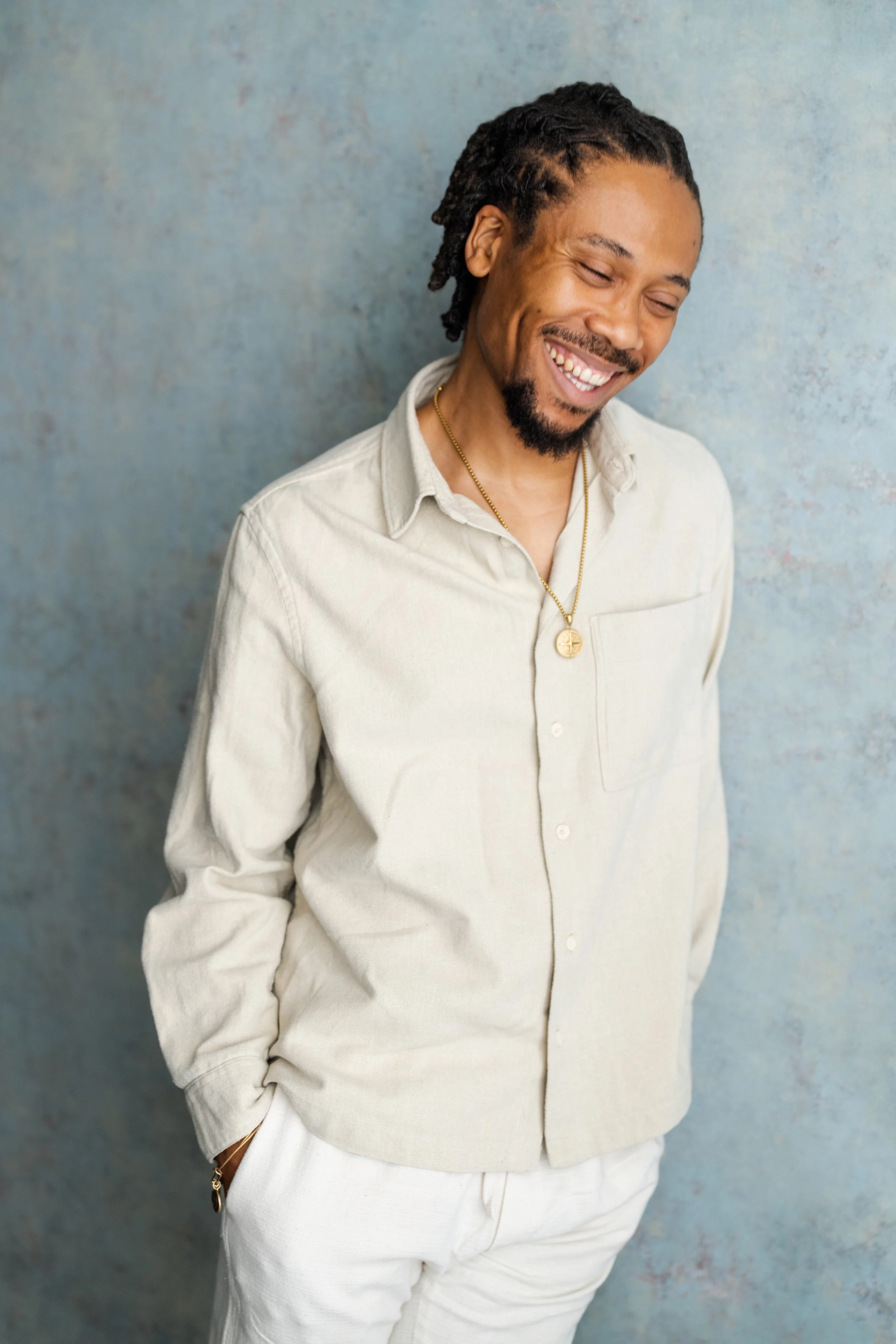
He hopes people leave recognising echoes they had never consciously noticed before fragments of Caribbean musical traditions embedded in contemporary British genres, reminders that cultural inheritance rarely announces itself loudly. “You do not leave thinking, 'That was nice—that thing that happened ages ago,” he says. “You think, now that I've seen that, I hear fragments of it everywhere.”
For all his experience, the concert stands for an unusually vulnerable moment. Shaw has spent much of his career placing his creativity in service of others, composing behind the scenes, directing ensembles, or writing for theatre. Here, for the first time in years, the work and the artist occupy the same stage. “There are nerves," he admits. "But the nerves aren't because I'm worried about performing.” Instead, they stem from something more protective: whether audiences will understand the work on its own terms. “This isn't an ego thing,” he says. “This is not my work. It is the work.” He compares the project to raising a child. “It might come from you, but it's not yours. It belongs to the people.”
The production's scale reflects that philosophy. King's Place has given Shaw the resources to realise a vision he had previously postponed, unwilling to compromise it for the sake of expediency. The ensemble brings together leading figures from across Britain's jazz, classical and contemporary music scenes—a gathering of artists Shaw speaks about less as collaborators than as heroes.
“I'm fans of these people as individuals,” he says. “To get them all in one room at the same time, and for them to say yes... it means they see what I'm trying to do.“
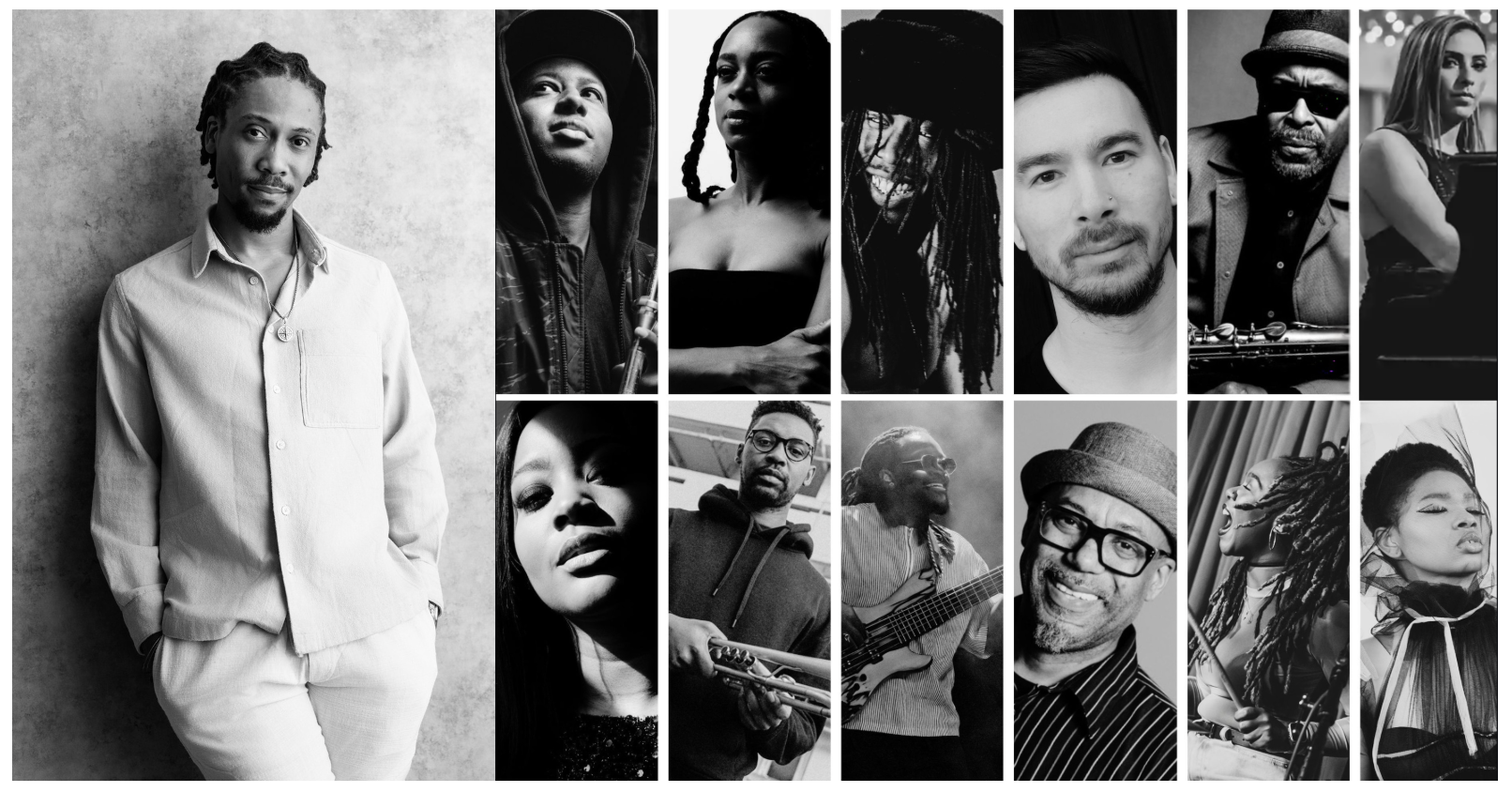
He lists the names with barely concealed excitement: saxophonist Jean Toussaint; mentor and percussionist Orphy Robinson; bassist Mutale Chashi; composer and drummer Romarna Campbell; vocalist Afronaut Zu. Altogether, they are decades of musical innovation across genres, assembled in service of a single narrative. “I can't wait to do it,” Shaw says smiling.
Away from rehearsals and concert halls, however, music loses its professional weight. Unlike many musicians, he says he can still experience it with uncomplicated joy. “I'm very fortunate that I have the ability to detach and listen to music as an audience member,” he says. “I don't need to analyse everything.” It is a gift he has become especially grateful for since becoming a father.
Music still fills the house, he says, “especially having a little boy now.”
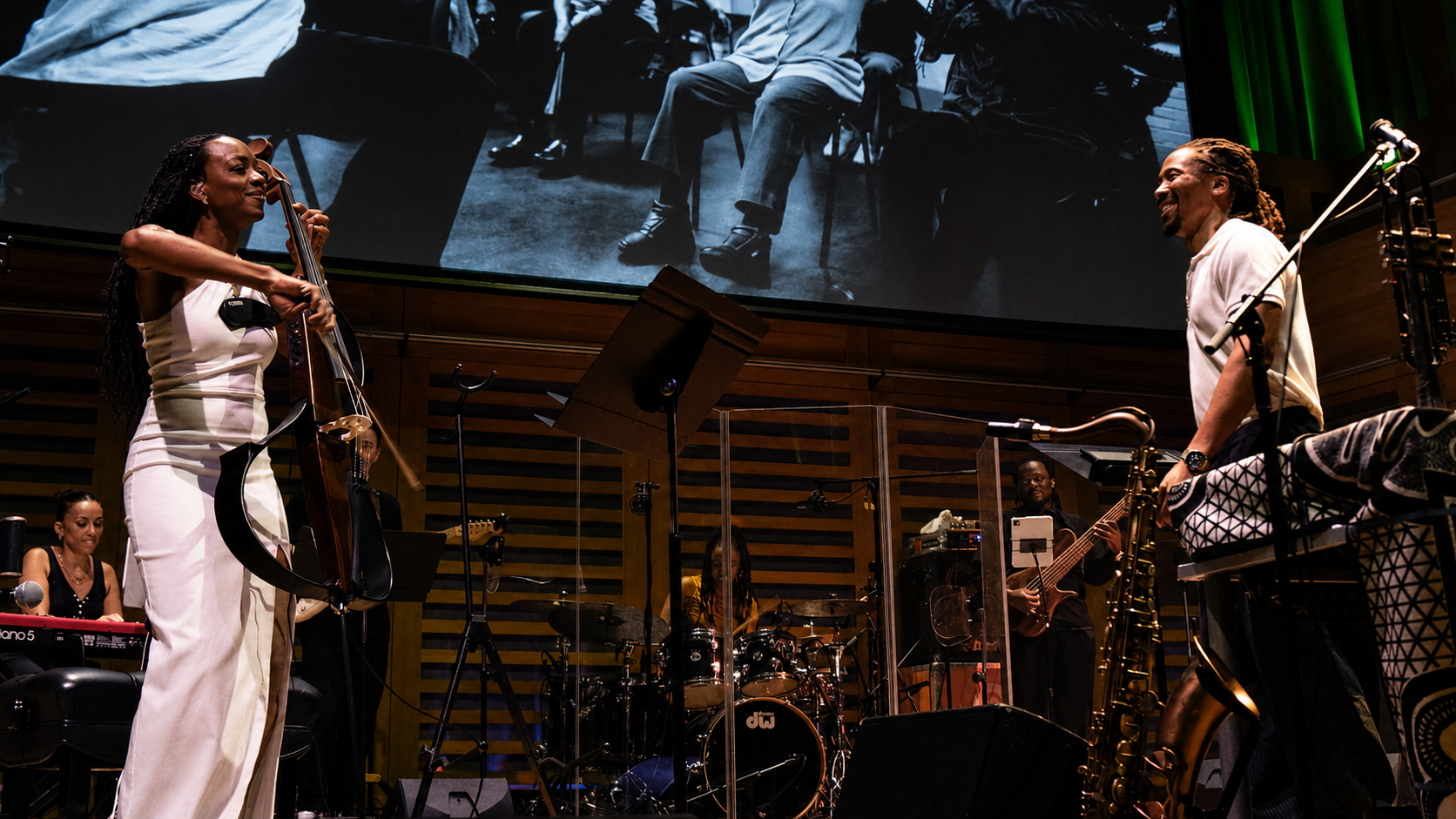
Renell had been quietly flagging the signs of what is to come for the tribute concert, to feel history than to understand it. Last week, King's Place became less a concert hall than a shared landscape of memory. Musicians appeared not as soloists waiting for applause but as storytellers, each instrument carrying a different thread of the narrative. Brass swelled and receded like waves crossing the Atlantic. Strings hovered between tension and release. Percussion pulsed with the insistence of footsteps, while spoken passages and layered textures blurred the line between documentary and dream. I asked how he finds stillness away from the demands of composing, directing, and performing. His answer was unexpectedly ordinary. “I'm very fortunate that I have the ability to detach and listen to music as an audience member," he says. “I can go home and listen to music like someone who can't play an instrument and just loves music.”
Music, he explains, stays a constant presence at home, though it now carries a different responsibility. Since becoming a father, listening has become an act of curation as much as pleasure. “I'm so selective about what music I'm immersing him with.”
His days begin with long walks, often followed by Tai Chi, a practice introduced by his godfather when he was nine. The ritual, he says, is less about discipline than recalibration—a way of returning to himself before the noise of work begins. Home, however, offers its own kind of refuge. “If I'm honest," he says, smiling, "I just love spending time talking with my wife.” His wife, a musical theatre performer whose credits include Chicago, Legally Blonde and White Christmas, understands the emotional rhythms of a creative life without explanation.
"She's like, 'I get where you're coming from.' That is so cathartic, to be heard and seen.” Their conversations, he says, have become as restorative as silence itself. What surprised him most, however, was fatherhood's effect on his work. Rather than interrupting his creativity, it unlocked it.
For two years, Shaw had been trying to complete the third movement of his musical suite, Remember Us Tomorrow. Nothing came. Then his son was born. “I started hearing ideas," he recalls. "This is the final suite because it didn't have a purpose. Now I realise what I am writing is my story.” The work had shifted. It was no longer simply about honouring those who came before him but leaving something for the generation that follows. “When he grows up... he can understand his father's legacy via the music as well as our conversation.” It is a sentiment that reveals something fundamental about Shaw's approach to authorship. His compositions are never monuments to himself; they are conversations stretched across generations. That philosophy extends beyond his own projects and into the commercial songwriting rooms he has occupied throughout his career. While some artists arrive determined to leave their own imprint, Shaw describes the process as an exercise in self-erasure.
“I'm not in the room for me," he says. "I'm in the room as a songwriter to bring out the best version of them.” He speaks often about ego—not in the performative sense, but as something that requires constant monitoring. “I might hear something and go, 'Oh, it could be this,” he says. "But if what they're creating makes them feel like this is the best thing, then it's done its job.”
Commercial songwriting, he argues, often misunderstood by musicians who equate complexity with value. Craft, he insists, should not be confused with difficulty. “To write a song that makes hundreds of thousands—or millions—of people want to buy it and sing it back to you is a craft. “
He pauses.
“It is remarkably easy to say, 'Oh, it's just three chords.' But when you have three chords and 400,000 people singing that melody back at you... that takes skill."
His role, he says, is rarely to impose ideas. Instead, it is to recognise qualities artists have yet to recognise in themselves. “I'm trying to be a mirror," he says. "'Hey, this is cool. This is different—but it's you.” Over time, he has noticed a pattern. “I have been in enough rooms where artists have said, 'I didn't know I could do that.” He laughs. “I have realised I'm the 'I did not know I could do that' guy.”
It is an observation that feels surprisingly consistent with the performance at King's Place. Shaw's work is less interested in displaying virtuosity than in creating conditions for revelation—for audiences, collaborators and, occasionally, himself.
Later, our conversation turned towards the music that first surrounded him. His maternal grandparents came from Jamaica; his paternal grandparents from Dominica. Between them lay two distinct Caribbean traditions, each carrying its own rhythms and cultural references. His grandfather on his father's side loved calypso and cricket. His mother's family filled the house with ska, roots reggae and dub. His parents, meanwhile, came of age as Britain's own musical identity built through jungle, drum and bass, house, and the Soul II Soul movement.
“My dad was a sound engineer,” Shaw recalls. “I would see people like Goldie... I saw drum and bass happening as it was happening.” He laughs at the memory. “One, I should not have been in the club. Two, I was about eight or nine.”
Only with hindsight, he says, has he understood what those experiences gave him. His family's story was never simply one of migration, but of continual reinvention. “They were trying to find where they sat," he says. "In the house it was Jamaica or Dominica. Outside the house it was Britain.” His own generation inherited a different confidence. “I don't feel like I need to be validated by British or Caribbean originals to feel more Caribbean," he says. "I choose what parts of those I want to be me.” It is the clearest articulation of what his work has been trying all along, not to resolve questions of identity, but to show that identity itself is a living composition. Improvised, inherited and endlessly evolving.
Join us in celebrating the final chapter of ‘The Windrush Suite, Remember Us Tomorrow’, taking place at King’s Place on 9th October 2026.