
Poetry With The Lord’s Guidance: Israel Ignites The Beauty Of Brotherhood
The provocation may be the point, if so, “Brotherhood” has succeeded. As far as poetry go, generations have found freedom through the art. After the meeting with poet, Israel, I spent my entire walk to Shoreditch High Street station, I felt optimistic for the future of the generations behind me. Hope was reignited after the meeting ended.
When Israel drafted the poem, he recalled many moments from his pre-adolescent years that influenced how he saw himself as a young Black man living in Hackney. “Brotherhood, that was the second poem I wrote. I was just writing,” as the 21-year-old part-time worker began.He has spent the last few years self-discovering through faith and finding his space in a world filled with confusion. As one starting life, the poet speaks with the clarity of someone examining the invisible boundaries that shaped his childhood. Reflecting on a poem that opens with a reference to Robin Hood, he describes how geography often dictated relationships in Black communities growing up. “It’s funny,” he says, “because growing up I would have talked to him if he was from the other area.”
The remark lands with a mix of humour and sadness, pointing to the ways postcodes became social borders. For him, the poem is less about division itself than the isolation it creates, how young people living only streets apart can feel worlds away, their sense of community constrained by the neighbourhoods they come from.
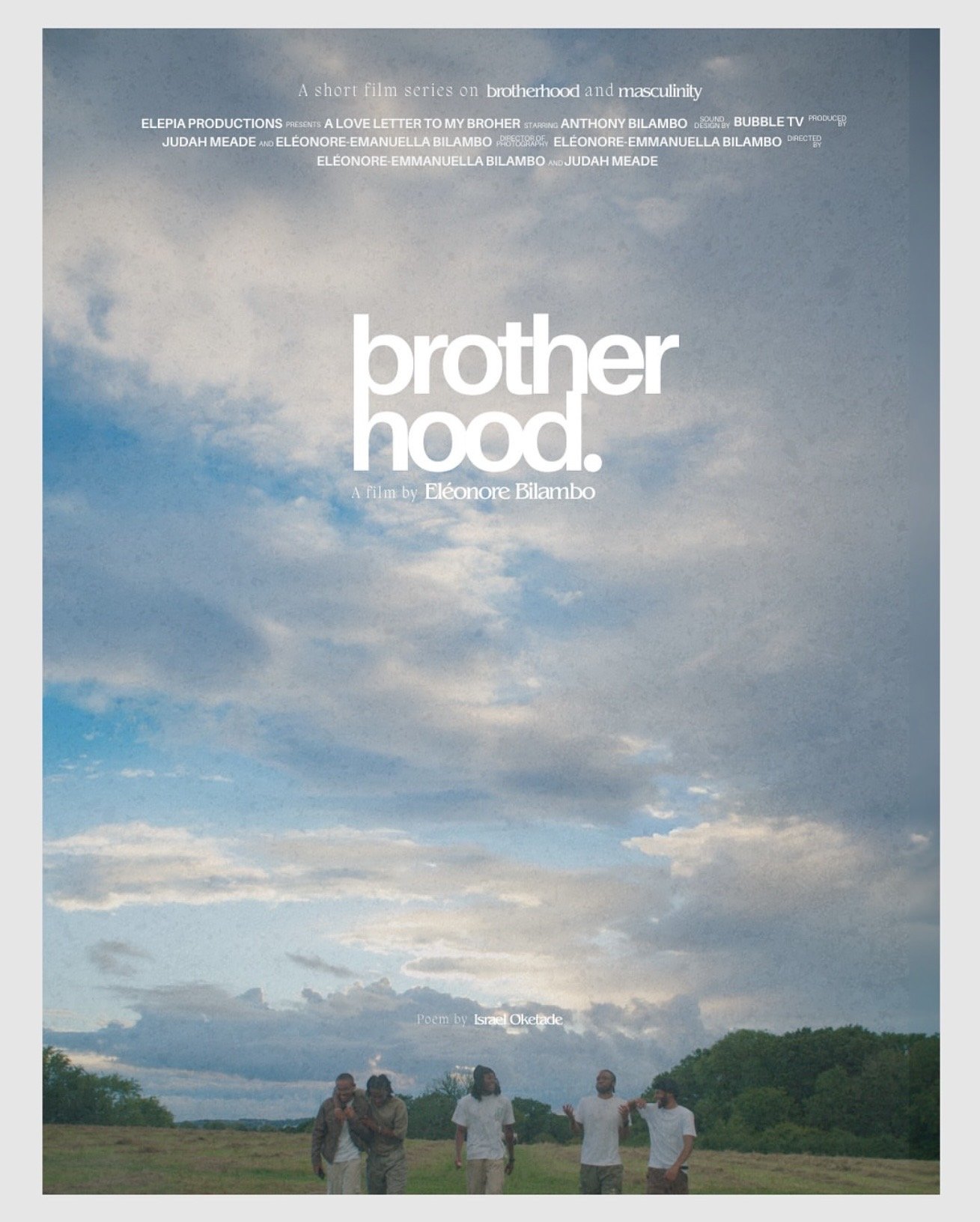
But brotherhood has not been a prominent experience for him, having closeness to his brothers proved to be a challenge, “I am the youngest, I have two older brothers and I’m the youngest.” The gap in age between the brothers proved to be a lonesome time for Israel, he swiftly picked up a community at a local church, “With my blood brother, I love you. It just feels that I do not really have my ride or die, brother. The brotherhood that I found at my local church.” Hackney is a place he called home, and without any elders of his pack guiding closely, Israel found solace in friendships at the church. “That was what I was longing for. Wow, I really found the brothers,” he explained as a smile creeped on his face. The project took a new direction when Eleanor, his close friend—then a friend, now her partner—suggested adapting it into a short film. A director by profession, he recognised the story's cinematic potential and encouraged her to bring it to the screen. “Just us boys. And, like, I do not think we, I do not think we knew the impact of what we were doing until it was done,” he says.
Writing is a particularly intimate process, one that only Israel can explain. “By then, all the people that I was writing about, I had only known them for 2 months. It is like I wrote that, then everything I wrote, started to happen.” I have been fascinated by the development of a story, especially as he writes candidly about experiences often left unspoken – loneliness, desire, and the complexities of navigating the world as a young Black man. Israel’s poems are deeply personal, yet they illuminate broader social realities, inviting readers to conversations around identity, belonging, and vulnerability.
What stands out about them is simply that the subjects transform themselves, but the honesty and nuance with which he approaches them, transformed individual journeys into something resonant and universal. “Seeing how people from diverse backgrounds connected with it showed me how universal brotherhood is. It resonated across race, gender, and paths.”
For Israel, the short film accompanying Kallum almost never happened.
The idea itself came easily enough. Amsterdam felt right. He could already picture the atmosphere he wanted to capture, the mood, the movement, the sense of freedom that would mirror the poem. The problem was everything that came after.
There was no budget to speak of. Just £800 and a vision that far exceeded it. "How am I going to do this?" he remembers thinking. That £800 had to cover the entire trip. There were no flights, no luxury accommodation and certainly no contingency fund. Instead, Israel and his team boarded a 12-hour coach from London to Amsterdam, ferry included, carrying little more than their equipment and determination. Every decision was chosen by necessity.
Yet somehow, things kept falling into place.
Through a fortunate connection, the team secured an Arri camera equipment that would normally cost thousands to hire. Without that favour, the camera alone could have consumed the entire budget. Looking back, Israel still speaks about those moments with a sense of disbelief. “It felt like the right people kept appearing at the right time."
When they arrived in Amsterdam, there was little opportunity to rest. The team moved at once into production, filming while exhausted from the overnight journey. In some of the earliest footage, bags remained visible on set, a quiet reminder of just how tightly planned the trip was.
What followed felt, in many ways, improbable.
Every shot on the storyboard was captured. Even the final scene—the one Israel had worried about most. The closing shot required a rooftop overlooking the city, but as the day wore on, the team still had no location. With only hours remaining before they had to leave for their return coach, they began asking strangers for recommendations. Rooftops, viewpoints, anywhere with the perspective they needed.
Eventually, someone suggested a nearby five-star hotel. The team walked in without a plan. Security let them pass. The hotel itself declined permission to film, but a restaurant sharing the rooftop space offered a reluctant compromise: be quick. Standing on the rooftop, Israel at once recognised it. "This is it," he told the crew. As traffic moved below and time ran out, they filmed the final sequence. Against the odds, the shot matched the image that had existed in his head for months. By the time they boarded the coach home, every scene on the shot list had finished. For Israel, however, the significance of Kallum extends far beyond the filmmaking story.
When the film was released, one viewer's reaction stayed with him more than any review or online response ever could. Kallum's mother watched the film and was overcome with emotion. She cried as she spoke to Israel, telling him how much it meant to see the care and friendship surrounding her son. Two months later, she passed away from cancer. The timing transformed the film's meaning entirely.
The memory is still difficult for Israel to talk about, but it also provides a source of comfort. Knowing she was able to watch the finished film before her death has become one of the experiences that continues to shape his understanding of his work. "It gave me peace," he says.
More importantly, it shifted his perspective on why he creates. What had begun as a poem and an ambitious low-budget film became something larger—a reminder that art rarely belongs solely to the artist. Its impact often reveals itself in places the creator never expects.
Today, when fatigue sets in or self-doubt begins to creep into the writing process, Israel returns to that lesson. Somewhere, he believes, there is always someone waiting to see the work. Someone who might recognise themselves in it, find comfort in it or simply feel less alone because it exists.
For him, that is reason enough to keep going.